


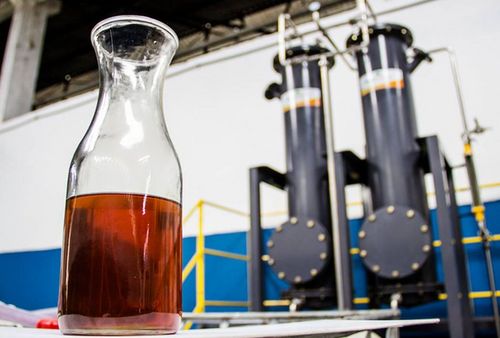
São Paulo – During the FIFA World Cup in Brazil, next year, the delegations of the participating countries will travel in buses fuelled by biodiesel made from recycled oil. The fuel will be a mixture of 80% regular diesel and 20% recycled oil, made at productive arrangements set up in the World Cup host cities. The project belongs to a Biotechnos Projetos Autossustentáveis, a company based in Santa Rosa, in the state of Rio Grande do Sul, with an office in Rio de Janeiro.
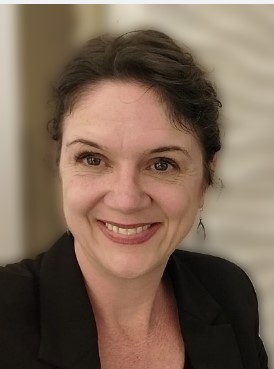
Biotechnos is developing the venture after having been selected to take part in the 2014 World Cup Brazil Promotion Plan. According to Márcia Werle, the company’s chairwoman of the board, 40 productive arrangements will be setup in the host cities. The first of them, in Rio de Janeiro, has already become operational this year, and it has supplied biodiesel to generators that were used during the World Youth Journey last July on Copacabana.
According to the executive, the projects in Brasília, Fortaleza and Belo Horizonte are well underway. By the World Cup, these arrangements should have produced 25 million litres of biodiesel. The product will be used in transporting the delegations, but also to other ends. The idea is for the fuel to be showcased to the world during the Cup, but also for it to become a legacy. In Rio, the sustainable biodiesel currently in production is used by PET bottle-collector trucks, and there are talks underway for usage by urban cleaning trucks.
Werle explains that the initiative benefits the environment in many different fronts, among them pollutant gas emission, which is cut down by 60% by adding biodiesel to regular diesel. “One litre of oil contaminates 25,000 litres of water, according to figures from the Sabesp (São Paulo water utility),” she says regarding the environmental benefits to the riverbeds. There are also economic and social advantages, because each arrangement directly involves ten to 15 people.
Biotechnos coordinates the project, but there are different implementation partners in each, mostly non-government organizations involved in environmental education, and a cooperative which collects oil from households and companies and processes it into biodiesel. The initiative has been dubbed Bioplanet, because it involves not only the use of equipment for sustainable production, but also education to the population involved.
Biotechnos creates technology for projects like the World Cup one, and also caters to structuring out the arrangements. The company was founded in 2007 and has two investors, one from Rio de Janeiro and another from Rio Grande do Sul. Biotechnos’ activities extend beyond biodiesel, however, and include equipment production and the setting up of clusters for activities such as babassu oil and small distilleries.
Contact:
Biotechnos
Website: www.biotechnos.com.br
Telephone: (+55 55) 3513-0831
*Translated by Gabriel Pomerancblum
