


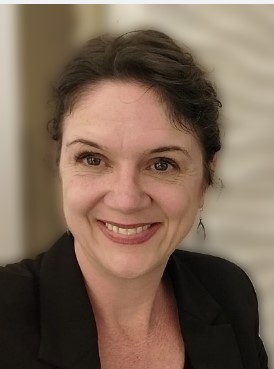
São Paulo – Jamile Abou Nouh, who lives in São Paulo and is a Lebanese descendent, is 56 years old. It was not long ago, however, that she asked her father, who lives in Paranavaí, in the state of Paraná, a few questions about the family’s origins. Jamile wrote down everything that her father, an 82-year-old man, told her, and now she will enrich the history of Arabs in Brazil with data on her family. She intends to register her story at the Al-Máhjar, a centre for studies on Arab immigration in Brazil that is maintained by the Institute of Arab Culture (Icarabe). The Al-Máhjar has a website that went online in 2008, in which people may describe the story of their ties with the Arabs. According to the Icarabe’s cultural and scientific director, Soraya Smaili, approximately 400 stories have already been submitted to the site.
Most of the stories are sent in by Arab immigrants or descendents, such as Jamile, but the project also allows people who are not of Arab origin, but are linked to the region or its culture, to tell the stories or their own Arab ties. The objective is to convert the tool into a large data bank about Arab immigration in Brazil. The material submitted by the people will be compiled, and a more in-depth study on immigration will be conducted based on it. The final goal is to turn the content into a book. Some of the material, however, should be availlable for consultation on the site before the year ends, according to Soraya. In addition to the written stories, the data bank should also include scanned documents and photos.
Even though the site is an important medium for collection of data about immigrants, there is more to the work of the study centre. In addition to a massive number of stories collected, interviews are being made with selected people for more comprehensive accounts and data collection. A total of 50 interviews will be conducted. "We will interview Milton Hatoum, Adib Jatene, but also anonymous people," claims Soraya, whose department is in charge of the cultural area, which in turn holds sway over the centre of studies on Arab immigration in Brazil. The interviews will also undergo in-depth analysis, and will be the subject of a book and a film. Interviews should take place this year and in the next year.
Specialized professionals are following up the oral history project as volunteers, Samira Osman, for instance, holds a doctorate in History, with a specialization in oral history, and Sabrina Moura is also a historian, with experience in document organization and iconography. Other collaborators are Geraldo Godoy Campos, sociologist, who will take part in the screening of the material, and Dolores Biruel, a library scientist who also specializes in documentation. The four are coordinators of the Al-Máhjar. Filmmaker Otávio Cury is collaborating as well, and is responsible for the footage. They are all volunteers.
From the master
"Each must write their own story down. Each must tell the story of their father, their grandfather, and tell something about their connection with Arab culture.” Words similar to these, said repeatedly by geographer Aziz Ab’Saber, the president of honour and "guru" of sorts for the Icarabe, were what inspired the heads of the institute to create Al-Máhjar. It all began with the formatting of an immaterial heritage project that was submitted for a tender invitation by Petrobras. "We devised this project without much clarity, in an attempt to start organizing our ideas. We did not win the tender, but it was important in order for us to take the next step, which was to establish a work and study group on immigration," says Soraya.
The current project for Al-Máhjar was formatted back then, in 2007, and late that year it was launched during an event at Casa das Rosas, in the capital of the state of São Paulo. The centre’s website, with the link for submission of stories, went online shortly thereafter. "We want to go a little deeper than we already have," says Soraya, regarding the analyses and studies that should be conducted based on the data bank. "And our objective is to make it public, because that it will be large. Large not in the sense of powerful, but in keeping with this immigration, which dates back 130 years or more," claims the director.
What about Jamile?
The story of Jamile should be there as soon as the Al-Máhjar data bank goes public. The Lebanese descendent follows the Icarabe and is a partner of the institute ever since it began operating, in 2004. She claims that she sought the institute in an attempt to get closer to her origins. "My mother was a Brazilian and my father is a Lebanese. I do not speak Arabic, so I did not feel quite Brazilian nor Lebanese, but when I started attending the Icarabe’s events, I noticed that there were many people like myself," she explains.
Jamile’s father came to Brazil at age 25, in 1952, without speaking Portuguese. In the following year, he married Jamile’s mother. He arrived in Santos, a port in the state of São Paulo, but headed to the interior of the state of Paraná. "He was a street peddler for a long time, walking miles and miles. Later on he bought a horse, then two horses and a cart," she tells. He ended up establishing a textile shop, and is still in the business until this day.
A practicing Muslim, in spite of his age, he prays five times a day, and in 2008 he went to Mecca to do the pilgrimage, which he had already done once, fifteen years ago. Among his children, three followed their father’s profession and stayed in trade. Three other children became a civil engineer, a business manager, and a psychotherapist, the latter case being Jamile’s, who also works at the Legislative Assembly of São Paulo.
Service
Submit your story with the Arabs
Site: www.icarabe.org
(On the Conte Sua História section, under the Al Máhjar link)
*Translated by Gabriel Pomerancblum
