



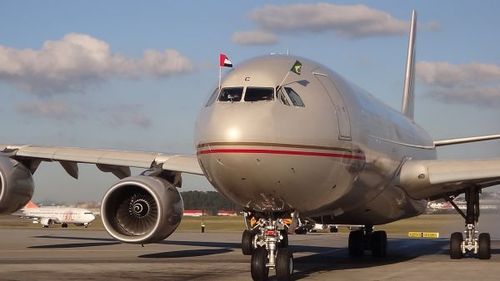
São Paulo – The Etihad Airline flight between Abu Dhabi and São Paulo last Wednesday (25) was chosen by Etihad airline for fuel consumption reduction. The initiative took place from the aircraft’s first movement, in the capital city of the United Arab Emirates, to passenger arrival at Guarulhos airport. The project is part of the Fuel Optimisation Week, promoted by the company to reduce aircraft consumption. According to the airline, the route was chosen as it is the longest and the newest.
“The São Paulo route is the largest in our network and is one of the most important in the aim at applying fuel optimisation techniques that may have substantial potential. As it is a relatively new route, we are flying in an air space that had not previously been tested by Etihad Airways, providing us with an opportunity to maintain productive dialogue with air controllers throughout the route and working with them to adjust the flight we operate to and from São Paulo,” said the airline to ANBA.
Among the changes for reduction of fuel consumption, the company mentioned modifications in the aircraft route in Abu Dhabi and lower use of Auxiliary Power Units (APUs), devices that provide energy to the aircraft in the place of the engines. They do not replace the turbines, but they feed equipment like the air conditioners, when the engines are turned off. According to Etihad, during the Week, all professionals involved in airline flights worked to reduce aircraft fuel spending. That even includes employees of the civil aviation authority.
The project for economising fuel was adopted in an Airbus A340-500 aircraft, which has been operating on the Abu Dhabi – São Paulo route since Etihad inaugurated its new flights to Brazil, on June 1st this year. In future, the company plans to operate a Boeing 777, which has already been used in exceptional situations. The route between the two cities is the longest operated by Etihad. The aircraft flies approximately 12,700 kilometres, with some variations on some flights due to wind.
Etihad said that in all flights it uses land systems to recalculate the route and economise fuel. However, according to the airline, the final objective of the Week is to “guarantee the engagement of all those involved in the project” so that they may participate in “long-term” cooperation resulting in permanent improvement for the route. Currently, the company flies to 94 destinations.
*Translated by Mark Ament
