


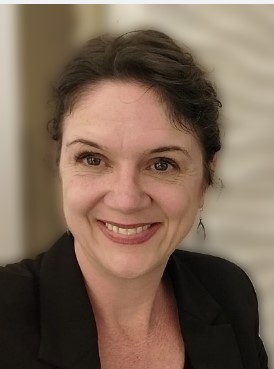
São Paulo – Ahmad Serieh, a 43-year-old Syrian, has already worked on archaeological excavations in sites in Bulgaria, Poland, Egypt and his own country. Two months ago, however, he started using his knowledge for a slightly different mission, but that also involves culture and history. Serieh became the director of the Arab Syrian Cultural Centre, an institution in the city of São Paulo that works on bringing Arabs and Brazilians closer together.
Serieh has been living in Brazil since late 2008 and has managed the Arab Syrian Cultural Centre since then. He was nominated for the position by the Ministry of Culture of Syria. In his new post, at the institution’s headquarters, Serieh is already, for example, considering expanding the organisation’s operation to other states. The project for establishment of a laboratory has been sent to the Ministry of Culture of Syria and is awaiting an answer.
One of the main activities of the Arab Syrian Cultural Centre is teaching Arabic. The institution gives free lessons to around 700 students each year. The classes take place at night. With the creation of a laboratory, 20 computers will be made available each day, for use by those interested, alongside a book and a CD, helping learn more about the Arab language. The idea is to have teachers standing by to help them if necessary.
Serieh hopes that the project may be operating by next year and points out the importance of teaching Arabic in Brazil. “It is very important for integration between Syria and Brazil,” said the director. The Cultural Centre also promotes other activities like exhibitions and talks, as well as allowing those present to watch Arabic television channels and read Syrian papers. It also organises an Arab dance group. The institution’s library has 20,000 books.
The Syrian community, according to Serieh, visits the centre very much to get more current information about their country of origin. Brazilians also seek the site to learn about the Arab and Syrian culture and history. Public schools and universities usually take their students to visit the Centre, explained the new director. In the hallways and rooms of the institution, Arabic is used regularly.
The director
Serieh graduated in History from the University of Damascus, but his master’s and doctorate were in the area of archaeology. The first was about urbanisation in Mesopotamia, three years before Christ, and the second about Mesopotamia and Ancient Egypt. They were both pursued at the University of Warsaw, in Poland, where the director also taught. Serieh has also taught at universities in other countries, like Japan, Korea and Italy.
In the curriculum of the new director of the Arab Syrian Cultural Centre are three months working at the Louvre, in Paris, and management of the museum area in Syria. In Brazil, Serieh also gives talks about archaeology. He hopes to have a chance to become a university professor. Very comfortable in the country, Serieh said that Brazil is currently the most important country in the world, in the economic point of view, and praises the natural beauties and hospitality of the country population.
“Brazil is very rich, has all kinds of natural resources, beautiful forests and very friendly people,” he said. Serieh says he sees many similarities between the mentality of Brazilians and Orientals, whom he describes as open-minded, happy people. Serieh also recalls that the Brazilian culture has many Arab characteristics. “In Brazil there are many Arabs, especially Syrian and Lebanese – over 15 million. These people brought their culture to Brazil. The country currently has many elements of Arab culture, in folklore and food, and Brazilians know kibbehs, humus and falafel,” he said.
*Translated by Mark Ament
