



São Paulo – Footwear exports from Brazil to Arab countries amounted to a combined US$ 35.16 million year-to-date through July this year, up 23.8% from the same period of last year, according to figures supplied by the Brazilian Ministry of Development, Industry and Foreign Trade and compiled by the Arab Brazilian Chamber of Commerce. Conversely, total footwear exports from Brazil were down 2.61% to US$ 728 million. As a result, the Middle East and North Africa’s share in overall Brazilian footwear exports went from 3.9% to nearly 5%.
To the projects manager at the Brazilian Footwear Industry Association (Abicalçados), Cristiano Körbes, the hike in sales to Arab countries can be ascribed to higher consumption, coupled with a scenario that favours sales by Brazilian brands in the region. “Brazil sustains excellent relations with those countries,” he said. “The companies perform good work and several major brands are targeting the Arab markets,” he added.
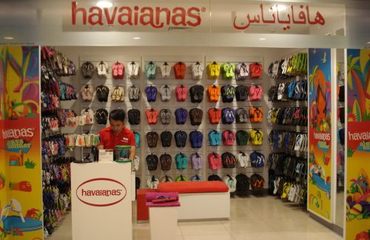
As a matter of fact, Brazilian shoes are a mainstay in Arab shop windows and Brazilian brands like Havaianas and Dumond even have proprietary stores, most notably in the United Arab Emirates.
According to the chairman of the Footwear Industry Union of Franca (Sindifranca), a shoe manufacturing hub in the state of São Paulo, José Carlos Brigagão do Couto, in the past, sales used to concentrate in the United States, but business cooled off and Asian competition increased. “[As a result] the industry set off searching for new markets and started offering specific products and proprietary brands tailored after each market’s demands in terms of design, pricing etc.,” the executive said.
Many Franca-based companies either export or have exported to Arab countries, including Ferracini, Radamés, Ilustre, Villione and Jovaceli, all of which are men’s shoes manufacturers formerly featured on ANBA. The companies in Franca specialize in men’s shoes. “[The top-selling shoes to Arab countries] are dress shoes for men and some types of comfort shoes,” says Couto. “[The customers] are very particular when it comes to quality,” he remarked.
Saudi Arabia and the Emirates are respectively the second and third leading export destinations for products from Franca, the first being the United States. The next Arab country on the list is Kuwait. These are also the three leading targets of the Brazilian shoe industry as a whole in the Middle East and North Africa.
Considering Brazilian production as a whole, the top export item to Arabs is not men’s shoes, but sandals, flip-flops and shoes with rubber uppers, according to Körbes. “The current trend on the Arab market is rubber and plastic-made products, because of the heat, and Brazil is home to some very strong brands in this particular segment,” he said. One of the Brazilian brands selling sandals to the region is Amazônia Sandals, a division of Grupo Amazonas, which also operates from Franca.
International competition
To the Abicalçados manager, Asian competition, especially from China, has not detracted from Brazilian exports to Arab countries, unlike what has happened in other markets and even domestically. The reason for this is that Arab markets, especially the Gulf countries, are predominantly importers, and thus have no protectionist barriers in place against foreign purchases.
The Brazilian industry faces more hurdles in doing business with Latin American countries, where price is a decisive factor. “In Latin America, shoe production falls short of demand; the only country in the region whose production exceeds consumption is Brazil, so there is a surplus left to be exported,” said Körbes. “But Brazil is unable to compete [with China] price-wise,” he added.
According to him, despite their traditionally low costs, Chinese manufacturing plants were dealt a blow with the European Union crisis and turned to shipping their production elsewhere, to places like Latin America and Africa, “at dirt-cheap prices”.
In addition to competition from Asia, Couto links the decline in overall exports to loss of competitiveness stemming from a high exchange rate and to “Custo Brasil,” i.e. the fact that Brazilian businesses are burdened by taxes, labour charges and logistics spending. “We have two role models to look up to, Mexico and Portugal, whose shoe industries are being given incentives,” he claimed.
When it comes to the Arab world, however, industrialists are expecting sales to rise. “The outlook is one of rising exports,” Körbes noted. “The market holds promise, provided that the current scenario persists,” Couto remarked. But he also issued a warning: “The expectation of increased paperwork, with the addition of expensive, specific testing [by importing countries] is cause for concern among Franca shoe manufacturers.”
Promotion
In the commercial promotion front, industry organizations are engaging in visits and business missions, sending agents to target markets and attending exhibitions. “Middle East clients really enjoy going abroad to buy, they travel a lot to look for suppliers,” said Körbes. Thus, it is not uncommon for executives to come across Arab importers at events in the United States and Europe.
The Abicalçados manager also said the organization plans on carrying out promotional actions in the Emirates and that an Emirati company was invited for the World Cup Project, a matchmaking event held during the football championship in Brazil, sponsored by the Brazilian Export and Investment Promotion Agency (Apex-Brasil). “The companies regard those markets as priorities,” he stressed.
Couto believes other similar efforts may be positive. “One action that could fuel exports would be to have Arab storeowners take part in the Buyer Project held by Abicalçados in partnership with the Apex. This way, the importers would be brought to Franca to tour the factories and engage in trade,” he said.
*Translated by Gabriel Pomerancblum

