



São Paulo – It starts this Wednesday (12th), in the city of São Paulo, the 10th Arab World Film Festival. According to the Institute for Arab Culture (Icarabe), which is organizing it, this will be the event’s largest edition to date, with more than 30 movies in the programming. The festival has the support of the Arab Brazilian Chamber of Commerce.
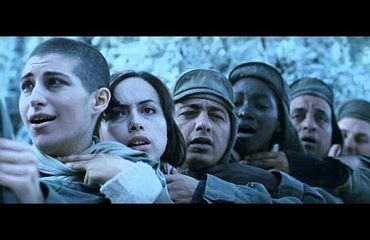
The opening will be at CineSesc with the screening of Sotto Voce, from Moroccan director Kamal Kamal, one of the festival’s highlights. The movie, according to the Icarabe, was not yet released in Brazil. The story is set during Algeria’s independence war. In the Morocco border, the French government orders to lift an electrified fence to stop the crossing of supplies for the National Liberation Army (ALN, in the French acronym). Moussa, a supporter of the revolution, is given the mission of leading through the blockade a group of deaf refugees, following a path that, besides the electrified fence, is full of mines. The exhibition will be followed by a debate with Miguel Chaia, a social scientist and a PUC-SP (Pontifical Catholic University of São Paulo) professor.
Another unreleased movie in the country is Theeb, a Jordan, United Arab Emirates, Qatar and United Kingdom production. Directed by Jordanian Naji Abu Nowar, the movie tells the story of a Bedouin kid from the Ottoman province of Hejaz, current Saudi Arabia, who, during the First World War, goes on a dangerous adventure to guide a British official through the desert, on their way to a secret destination.
Also a highlight is Silvered Water, Syria Self Portrait, by the Syrian director Ossama Mohammed. He put together vídeos available online that portray the conflicts in his country. According to the Icarabe, the narrative is marked by the following question: “If your camera is in Homs, what would you be recording?”
The institute points out that for the first time the festival will have two productions from Yemen: Karama has no walls, which was nominated for an Oscar in the short documentary category in 2014, and The Mulberry House , both by director Sara Ishaq. The first talks about the Yemeni popular uprising following the Arab Spring and the ensuing violent repression.
The programming this year will also bring other artistic manifestations, such as literature, music and theatre, besides a series of panels. In the first case, for instance, there will be a tribute to Brazilian writer Raduan Nassar, son of Lebanese immigrants, with the screening of To the Left of the Father, movie based in this work, followed by a debate with the Amazonas state novelist Milton Hatoum, also of Arab descent.
Among the international guests, the Syrian based in Egypt journalist and movie critic Alaa Karkouti; the Moroccan musical producer Brahim El Mazned; and the illustrator, photographer and visual artist Maher Diab, from Egypt.
Among the Brazilian guests are, besides Chaia and Hatoum, José Arbex Jr. (journalist), Marcia Dib (choreographer and dance professor), the former minister Paulo Sérgio Pinheiro, president of the Independent Committee of Inquiry about Syria; and Silvia Antibas, historian and director of the Arab Chamber.
The festival runs until September 12th. Besides São Paulo, there will be events scheduled in Rio de Janeiro, Belo Horizonte and Vitória (ES). The programming is long and will be distributed through several movie theaters. Check time, place, ticket prices and other details at Icarabe’s website: http://www.icarabe.org/noticias/10a-mostra-mundo-arabe-de-cinema-estreia-em-sao-paulo-no-dia-12
The opening screening at CineSesc, in the city of São Paulo, is free. The movie starts at 8:30 PM and the tickets will be distributed starting at 7 PM. The movie theater is at Rua Augusta, 2075, Cerqueira César, phone (11) 3087-0500 and email [email protected]
*Translated by Sérgio Kakitani
Watch below the trailers of some of the movies.

