



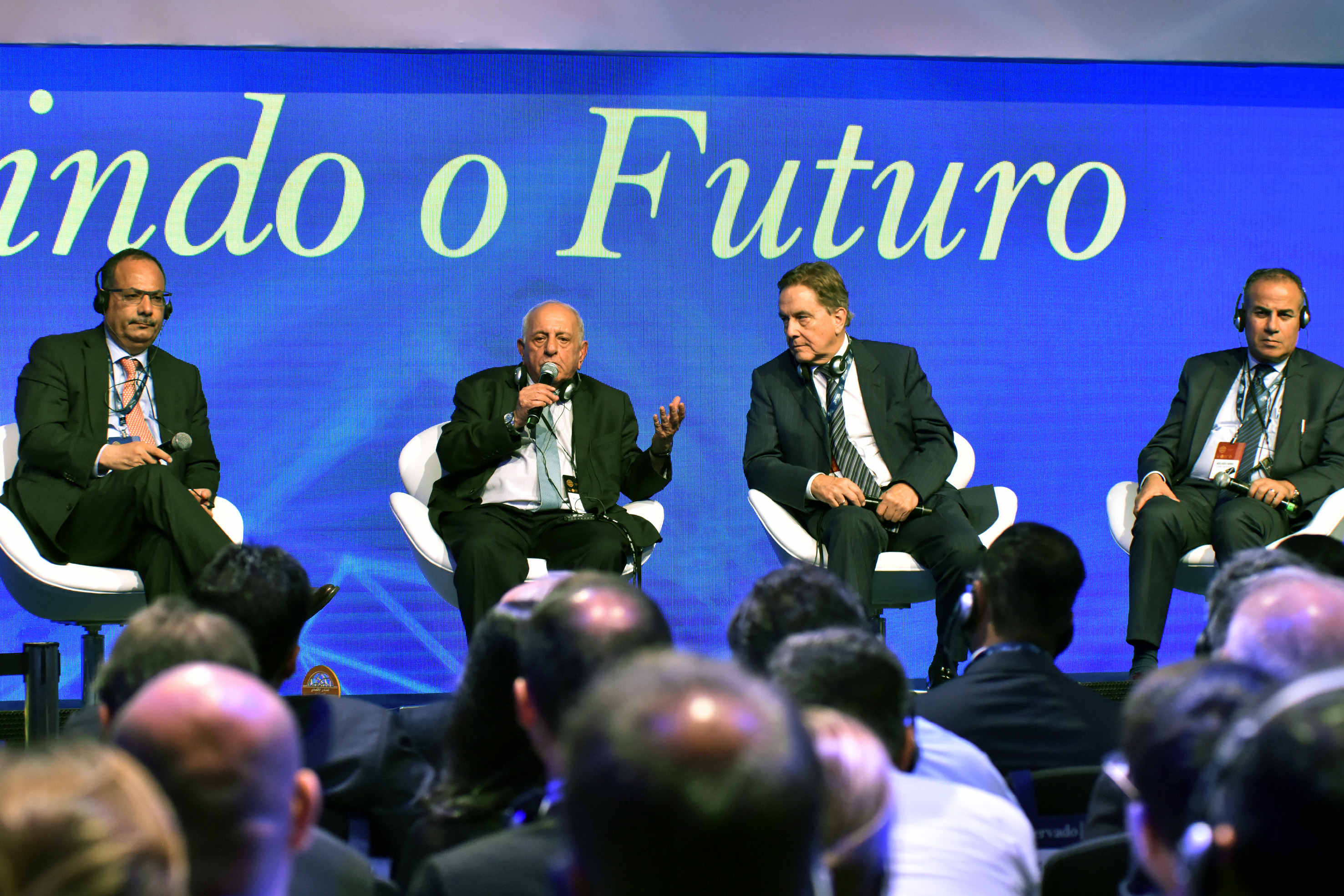

São Paulo – Economist Paulo Rabello de Castro, who has just left his position as president of the Brazilian Development Bank (BNDES), said an additional USD 15 billion (or BRL 50 billion) worth of funds are expected to become available to the bank over the next five years – originating from bond issues and from the Workers’ Support Fund (FAT). Rabello sat on a panel on Investments at the Brazil-Arab Countries Economic Forum this Monday (2) in São Paulo.
Rabello said a third of the total amount expected could originate from Arab countries – something to the tune of USD 5 billion. “Right now, we are short of even USD 1 billion, let alone USD 5 billion, but it’s a plausible goal,” he said. According to the economist, the BNDES could play the role of an investment bank for Arabs, who could purchase funds managed by the Brazilian bank.
He said BNDES will be able to rely less and less on government resources, therefore it will have to seek out funds abroad. Rabello also said Brazilian investors could also invest USD 5 billion in the Arab countries.
The panel was moderated by Arab Brazilian Chamber of Commerce CEO Michel Alaby and by Arab-German Chamber of Commerce secretary general Abdul Aziz Al-Makhlafi. The other featured panelists were Egypt’s Abd El Kadr Darwish, vice president of the Suez Canal Economic Zone; Mohamed Abdul Wahab, vice president of the Egyptian General Investment Authority; and Marwan Barakat, the chief economist with Lebanon’s Bank Audi.
Darwish argued for new initiatives designed to boost Arab-Brazilian trade. “Raw materials comprise 75% of exports from Brazil to Egypt. We want new ideas,” he said.
Wahab also said that a new investment law was passed last year in Egypt, awarding incentives and other benefits to non-local investors.
Barakat, in turn, said Brazil is a good gateway to other Latin American countries.
Translated by Gabriel Pomerancblum

