



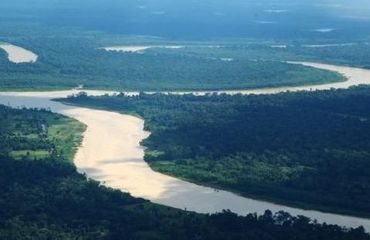
São Paulo – Three Arab countries will undergo training in the Brazilian forest satellite surveillance system. The National Institute for Space Research (Inpe, in the Portuguese acronym) has entered into a cooperation agreement with the Food and Agriculture Organization of the United Nations (FAO), to provide training in the area to 22 different countries, including Morocco, Tunisia and Algeria. The Inpe has outlined the trainees’ profile and the FAO is entrusted with selecting them.
According to the Inpe international cooperation advisor, Thelma Krug, the training will last two months and the first group will start being trained next month. The group will comprise technicians from Uruguay, Argentina, Chile and Equatorial Guinea, whose training will take place in Spanish language. Afterwards, there will be sessions in Portuguese and then English and French. The Moroccans, Tunisians and Algerians will be trained in French, according to Krug.
The advisor says the trainees will be linked to government, since the goal is to make the countries autonomous and capable of developing their own national monitoring systems. According to Krug, the Inpe will present its system, show how it works, and allow each country to tailor it to their needs. After that, the FAO will follow up with each of the countries and ascertain whether further interaction with the Inpe will be required.
Krug claims forest surveillance is on the upswing since countries are looking to benefit from Redd+, the United Nations program that rewards developing countries which reduce deforestation. The rewards originate from a fund maintained by developed countries, and in order to be paid, countries are required to have a reliable forest surveillance system, according to the advisor.
Arabs
According to Krug, the reality of forests in Morocco, Tunisia and Algeria wildly diverse from Brazil’s, however the system can be adapted to incorporate new types of data. One of the project’s advantages, according to the international cooperation advisor, is the fact that the Inpe can add new functionalities to its system.
The Inpe’s forest surveillance system is satellite-based. It employs images from multiple satellites instead of a single one. Since several different images of a given location are compiled, the system is more precise and less prone to interference from clouds, for instance, which could otherwise prevent a picture of a given area within the forest from being taken. The visual information is stored in the TerraAmazon platform, a system developed by the Inpe.
The cooperation agreement was signed by the Inpe and by FAO-Brazil. Apart from the three Arab countries and the four countries which will take part in the initial training sessions, the program will also cover Mozambique, São Tomé, Congo, Philippines, Laos, Thailand, Myanmar, Bhutan, Papua New Guinea, Sri Lanka, Nigeria, Ghana, South Africa, Kyrgyzstan and Tajikistan. The training will continue until next year and will take place at the Regional Centre for the Amazon, located in Belém, in the state of Pará.
*Translated by Gabriel Pomerancblum
