



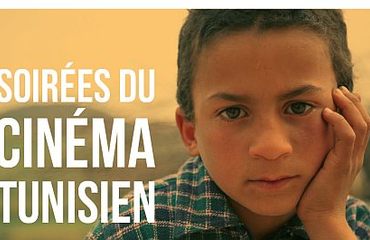
São Paulo – On the 30th and 31st this month in Brasília, the embassy of Tunisia and Alliance Française are hosting Tunisian Cinema Nights (Soirées du cinema tunisien), featuring five recent film productions from the Arab country. “The films deal with revolution, the values it stood for, the role of women,” said the ambassador of the North African country in Brazil, Sabri Bachtobji, during a visit to the Arab Brazilian Chamber of Commerce offices in São Paulo this Thursday (26th).
Nearly all the motion pictures were made after the popular uprising in 2011 that overthrew Zine El Abdine Ben Ali, then in power for over 20 years, and ushered in the so-called Arab Spring. There are two fiction flicks and three documentaries. “Tunisian cinema is known for being auteur cinema,” the ambassador remarked.
The festival in Brasília will take place less than two weeks after a terrorist attack at Tunis’ Bardo Museum claimed the lives of 23 people, of whom 20 were tourists, one was an anti-terror brigade agent and two were criminals. According to Bachtobji, Tunisian diplomatic representations worldwide sprang to action, backing cultural promotion actions to oppose violence.
“Those terrorists attacked the Bardo because they want to bring Tunisian culture to its knees, but what happened was the opposite, the whole Tunisian people joined into a movement of solidarity and cohesion,” the diplomat stressed. According to him, a spontaneous “chain of solidarity” has come together around the world, in several countries, cities, museums and other cultural institutions.
A slogan was created to express solidarity: Je suis Bardo (I am Bardo), which is printed on the promotional material for the film festival in Brasília. “Nothing can stop Tunisian culture, civilization, that is the message we want to give to the world,” the ambassador said. “The biggest weapon a people can have when it comes to developing is solidarity in the face of a threat. There needs to be a strong response, and solidarity is the best one,” he added.
Bachtobji said the Bardo Museum symbolizes the meeting of civilizations that has taken place in Tunisia since ancient times. The museum houses items such as artifacts from Ancient Carthage, the Roman period and Muslim civilization. The highlight is the Roman mosaics collection.
The diplomat believes terrorists want to “destroy civilization,” and this is what civil society is taking action against. He said, for instance, that a huge Brazilian delegation is attending the World Social Forum taking place this week in Tunis. “And this is one week after the attack. They are there just the same, they aren’t scared and they’re showing their solidarity,” he said. A big march against militant violence is scheduled for Sunday (29th) in the Tunisian capital.
But getting back to the films, the culture, communication and marketing manager for Alliance Française in Brasília, Suzzana Magalhães, said if the festival is successful, the plan is to host similar events every year. The organization often sponsors solely French-related cultural initiatives.
“Our program is usually focused on France, because we are a space for spreading French culture, but we also have room for spreading the culture of other French-speaking countries,” she explained. The sessions, according to the manager, will be free of charge and open to anyone who wishes to attend (see additional information below).
The ambassador also said the films should also be shown during Semana da África (the Africa Week), due in May in Brasília. He noted that the productions are spoken in Arabic, but feature French subtitles.
The movies
Millefeuille (Thousand Leafs, in a direct translation), by Nouri Bouzid, is a feature film from 2013, labeled as dramatic comedy, which tells the story of two young women, Zaineb and Aïcha, who fight for their independency and freedom and against religious and cultural archaic impositions. It’s a metaphor for the country itself, which oscillates between modernity and traditionalism.
Les souliers de l’Aïd or Sabbat El Aïd (Eid’s shoes, in direct translation), by Anis Lassoued, is a medium-length film from 2012, in which a kid, Nader, runs around his village to deliver puff pastry during the Ramadan, the month in the Islamic calendar in which the faithful must fast from sunrise to sunset. At the eve of the holiday that ends the fast period (the Eid from the title), his parents decide to buy new clothes to the kid, but he’s really interested in shoes.
Plus Jamais Peur (Fear Nevermore), by Mourad Bem Cheikh, is a 2011 documentary that shows the chain of events that culminated in the Tunisian revolution starting December 17th, 2010, when a young fruit vendor from the city of Sidi Bouzid immolated himself after having his products apprehended by police. The tragedy unleashed a wave of protests that culminated on the overthrow of Ben Ali.
Les Poupées de sucre de Nabeul (The Sugar Dolls of Nabeul), by Anis Lassoued, is a documentary and the only movie produced before the Arab Spring, in 2002. In it, the director recalls his childhood. Every year, in the Islamic New Years’ eve, his father would give big dolls to his sisters, a rooster to his brother and a little lion to him, all of it made of melted and colored sugar. According to Bachtobji, it’s a typical tradition in Mediterranean countries.
Militantes (Activists, in direct translation) is a documentary by Sonia Chamkhi, from 2012, that shows the environment of the first free elections of Tunisia and the women’s mobilization to participate in the democratization process of the country.
Service
Nights of Tunisian Cinema
March 30th, Monday
7 PM: Eid’s shoes (Les Souliers de l’Aïd ou Sabbat El Aïd)
7:40 PM: Millefeuille (Thousand Leafs)
9:30 PM: The Sugar Dolls of Nabeul (Les poupées de sucre de Nabeul)
March 31th, Tuesday
7 PM: Fear Nevermore (Plus Jamais Peur)
8:20 PM: Activists (Militantes)
Where: auditorium of Aliança Francesa (French Alliance) in Brasilia, SEPS 708, Lote A, Asa Sul
Phone: 55 61 3262-7600
Email: [email protected]
Website: www.afbrasilia.org.br
Free entrance
*Translated by Gabriel Pomerancblum and Sérgio Kakitani

