



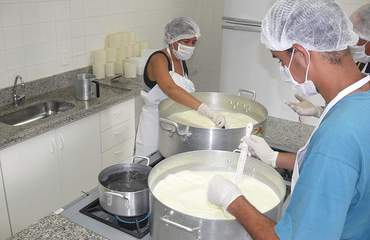
São Paulo – Milk production in Brazil will see R$ 387 million (US$ 94.81 million) in investment until 2019 for increased competitiveness and market share locally and abroad. One of the goals of the program announced this Tuesday (29th) by the Brazilian government is a three-fold increase in exports.
The Leite Saudável project (Portuguese for Healthy Milk) is a partnership between the Brazilian Ministry of Agriculture, Livestock and Supply and the Brazilian Micro and Small Business Support Service (Sebrae). The primary export target will be China, which takes in 14% of global milk production, or some US$ 6.4 billion a year, and Russia, whose imports amount to US$ 3.4 billion.
According to Ministry of Development, Industry and Foreign Trade data, from January through August this year Brazil exported US$ 294.3 million worth of milk, down 17% from a year ago. Besides milk and dairy, the number includes items such as eggs and honey.
The main focus of the program is to improve the livelihood of 80,000 dairy industry producers through increased income, competitiveness and milk quality. The program provides for actions divided into seven categories: technical managerial assistance, genetic improvement, agricultural policy, animal sanitation, milk quality, regulatory framework and market expansion.
The initiative will target producers in the Brazilian states of Goiás, Minas Gerais, Paraná, Rio Grande do Sul and Santa Catarina, the country’s top dairy producing states. The program was disclosed in depth by Agriculture minister Kátia Abreu at the headquarters of the Brazilian Agricultural Research Corporation (Embrapa) this Tuesday.
The producers will be offered technical and management courses, as well as be paid monthly visits by technicians who will oversee their properties and provide training to workers. Training will also be given to milk transporters and other dairy production chain personnel.
In genetics, farmers who could potentially benefit from genetic improvement practices will be selected. The goal is to achieve a 30% to 40% increase in artificial insemination and provide genetically improved embryos to 2,400 rural properties.
Easier access to lines of credit and subsidized interest rates will also be made available. To boost productivity, enhanced pest control and eradication programs will target diseases like Brucellosis and Animal Tuberculosis. An intelligence system will be developed in partnership with Embrapa to handle data concerning milk quality. The Ministry of Agriculture will review and adapt industry laws to ensure product quality and public health.
*Translated by Gabriel Pomerancblum

