



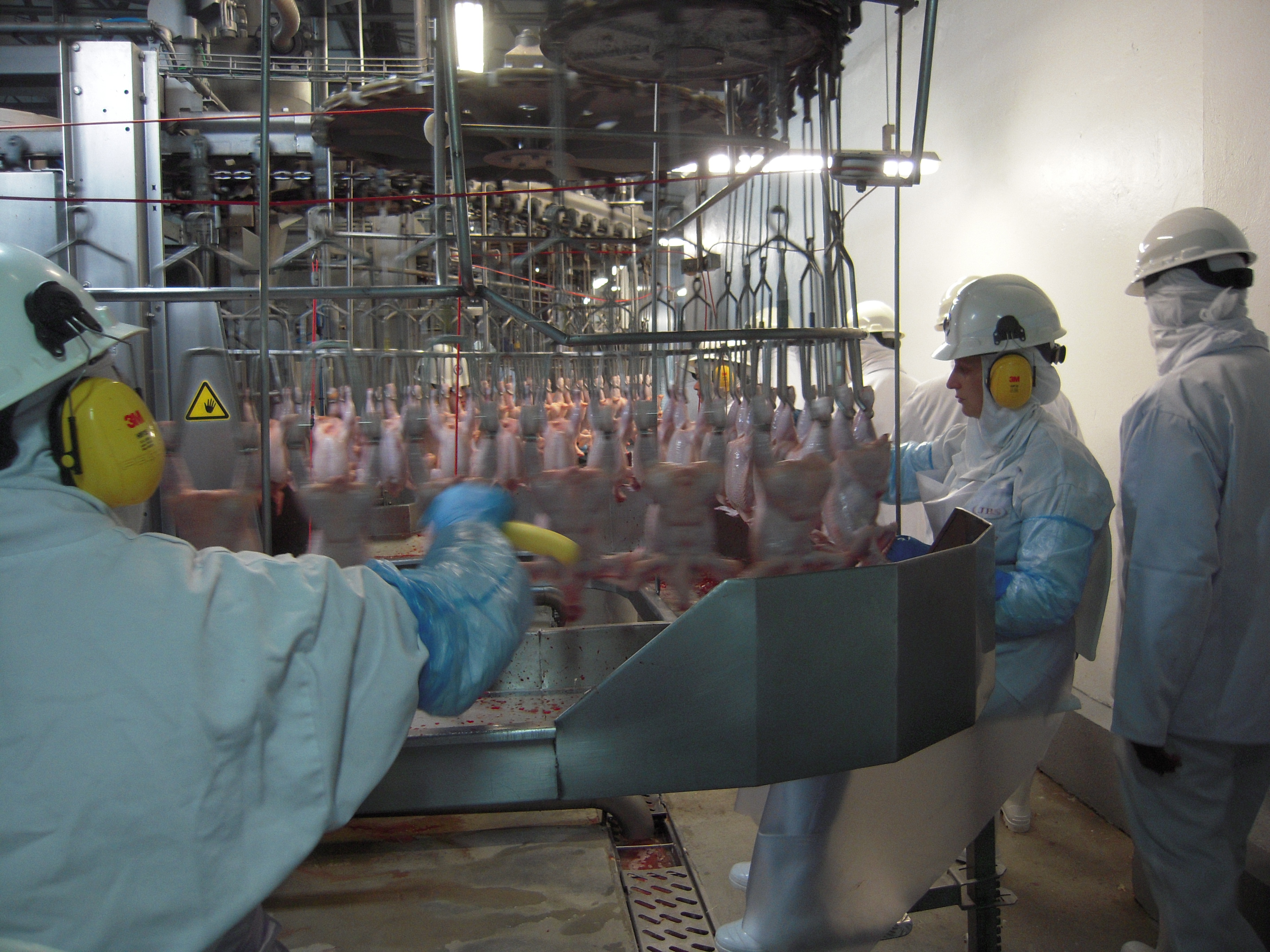
São Paulo – A Brazilian delegation will be in Saudi Arabia this weekend to discuss halal chicken slaughter standards with local authorities. The Arabian Peninsula country is the biggest buyer of Brazilian poultry. However, there are divergences regarding the practice of stunning the animals through electric shock prior to slaughter.

Halal means in accordance with Muslim traditions. However, the concept of what’s permissible or not varies from country to country. Birds are required to be alive the moment their necks are slit, and Saudi authorities claim that the shock kills the animals ahead of time. Brazilian producers, on the other hand, ensure that they’re not killed, just stunned.
“We will discuss halal slaughter standards and try to reach an agreement, said Arab Brazilian Chamber of Commerce Special Projects advisor Tamer Mansour, a veterinarian by trade with several years working in the meat industry under his belt.
Mansour will accompany a mission led by the executive secretary of Brazil’s Ministry of Agriculture, Livestock and Supply, Eumar Novacki. The delegation will also include the vice president of the Brazilian Animal Protein Association (ABPA), Rui Vargas, the secretary general of the International Poultry Council (IPC), Marília Rangel, and delegates from Brazilian halal certifiers.
“Saudi Arabia wants slaughter to be carried out without the stunning method, but Brazil would like to discuss that, and to demonstrate that the stunning method does not kill the bird,” Mansour stressed.
One of the method’s advantages, according to Mansour, is the fact that the bird sits still during slaughter, instead of flailing, which can lead to bruises. This ensures higher-quality meat.
One of the delegation’s meetings will be with the Saudi Food and Drug Authority (SFDA). The Arab country set a deadline on April 1st for Brazil and other exporting countries to comply with its requirements.
Last year saw Brazil ship over USD 1 billion worth of poultry to Saudi Arabia, down 13% from 2016, according to data from the Brazilian Ministry of Industry, Foreign Trade and Services.
Translated by Gabriel Pomerancblum

