



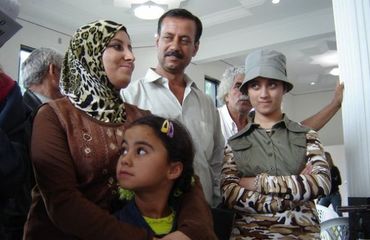
São Paulo – Brazil is expecting to welcome as many as 3,000 Syrian refugees by the end of 2017, and to earmark BRL 3.4 million for assistance to newly-arrived refugees and stateless persons. According to the United Nations High Commissioner for Refugees (UNHCR), the estimate was made public by the Brazilian government at the high level meeting on addressing large movements of refugees and migrants, at the UN headquarters in New York, to discuss solutions for the refugee crisis. Speaking to ANBA this Friday (23), the Brazilian Ministry of Justice and Citizenship confirmed the government’s estimates.
According to the UNHCR, Brazilian government officials claimed the country is “committed” to refugee resettlement initiatives, with an emphasis on women and children. Elders, adolescents and disabled persons will have priority getting their visa applications reviewed. At this time, some 9,000 refugees are living in the country, 2,300 of them Syrian.
The UNHCR also said Brazil will allocate BRL 1.2 million to refugee assistance this year, BRL 1.2 million next year via partnerships with organizations providing refugee aid, and BRL 1 million for resettlement purposes. At the meeting led by the United States government, the Brazilian minister of Justice Alexandre de Moraes said Brazil is committed to the safety, inclusion, and dignity of refugees.
Brazil will offer courses in Portuguese to approximately 270 refugees via its National Program for Access to Technical Teaching and Employment (Pronatec), and in entrepreneurship, with the Brazilian Micro and Small Business Support Service (Sebrae) to 200 refugees. This project is already underway.
At the same meeting, other countries made pledges. Turkey, Thailand, Chad and Jordan will contribute to the education of roughly 1 million refugee children, and offer training to over 1 million refugees. The meeting was attended by officials from nine countries in Africa, six countries in the Americas, seven countries in Asia, 20 countries in Europe, and six countries in the Middle East and North Africa.
*Translated by Gabriel Pomerancblum

