



Brasília – At the 19th United Nations Framework Convention on Climate Change, due from November 11th to 22nd in Warsaw, Poland, Brazil will propose for countries to hold internal consultations with all sectors of society regarding greenhouse gas emission reduction targets. Another suggestion will be for developed countries to immediately increase their emission reduction targets immediately, and for developing countries to implement voluntary reduction actions.
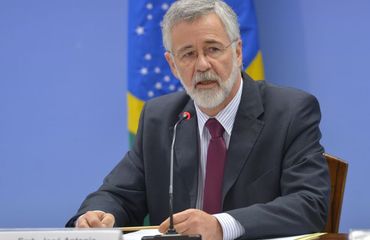
The undersecretary general for the Environment, Energy, Science and Technology at the Ministry of External Relations, José Antonio Marcondes de Carvalho, Brazil’s chief negotiator at international conferences on environmental issues, considers these commitments as key to progress in negotiations toward a new global climate change agreement, to be signed in 2015 at the Climate Conference, in Paris, and due to become effective in 2020. Talks for the new agreement will begin next year.
“The consultation is meant to garner support and legitimacy from all sectors of society to whichever targets are set. Immediate action is needed to break the inertia. This is an effort [to cut down emissions] in which we haven’t seen as much effort on the part of developed countries,” said Carvalho.
The Brazilian government will also suggest that a methodology be set forth by the Intergovernmental Panel on Climate Change (IPCC) for each country to establish its own historical responsibility in raising global temperature, seeing as the accumulation of carbon dioxide on the atmosphere harks back to the Industrial Revolution.
According to Carvalho, one of the COP-19 targets is to “prepare the grounds” to negotiations for the new global climate agreement, setting a schedule of agreements that allows for the inclusive and transparent participation of all countries. “These are complex negotiations because they affect consumption by society and the productive sector.”
Upon being asked whether pre-salt layer oil exploration will compromise Brazil’s credibility in climate talks, the ambassador said there is no contradiction between Brazil’s energy policy and the country’s commitments to cutting emissions. “Brazil is not the sole oil producing country in the world. We are beginning to explore a wealth which we possess in our territory,” he said. The burning of fossil fuels causes greenhouse gases to be launched onto the atmosphere.
“Brazil’s credibility remains completely unscathed with regard to the actions which are underway, all the more so because the country has made a voluntary commitment ahead of time to making very significant cuts in emission levels [by reducing deforestation],” the diplomat added. Carvalho noted that the Brazilian delegation will also propose that “advances are made in studies on carbon capture and sequestration [carbon dioxide causes the greenhouse effect].”
*Translated by Gabriel Pomerancblum

