


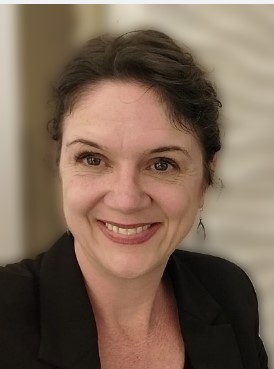
São Paulo – Diplomat Roberto Abdalla will travel to Kuwait in October, where he will take charge of the Brazilian embassy. Born in the city of Pernambuco, capital of the state of Recife, and a descendant of Lebanese, Abdalla will have in Kuwait his first mission as ambassador. The diplomat is bringing along the desire to enhance economic relations between the two regions and, in particular, to attract Kuwaiti investment into Brazil.
With a degree in Economics, Abdalla is coming from a stint as head of the Middle East II Division at the Brazilian Foreign Office (Itamaraty), where he garnered five years’ experience in relations with the Arab world. The diplomat is also going to be the Brazilian ambassador to Bahrain, where Brazil has no headquarters.
In an interview to ANBA, Abdalla discusses his plans and also the history of Kuwait and explains why the country is considered the most democratic in the Middle East. During a visit to the city of São Paulo, yesterday (19th), he was welcomed by the president of the Arab Brazilian Chamber of Commerce, Salim Taufic Schahin, the secretary general, Michel Alaby, the director of treasury Nahid Chicani, and director Bechara Ibrahim.
ANBA – What is your background in diplomacy?
I joined the Brazilian foreign office (Itamaraty) in 1983. I attended the Rio Branco Institute in 1983 and 1984 and was appointed third secretary in December 1984. My first job, at the Ministry of Foreign Relations, was in the Trade Promotion Program, of the Department for Promotion of Trade. I worked in the area for nearly ten years. Afterwards, I went to what was then known as the Brazilian Government Trade Bureau, in New York. Brazil has a consulate general in New York, and in the 1970s and 1980s, the bureau was very active. Then I became the head of the trade promotion sector at the embassy in New York, where I spent four years. I returned to Brazil only in 1994. My career then took a sharp turn. I became the ceremonial assistant to then-president Fernando Henrique Cardoso. I spent another four years doing ceremonies and headed to the embassy in London, where I was chief of staff to the ambassador at that time, Rubens Barbosa. I also headed the cultural sector. There, I managed festival Brazil Five Hundred ("Brasil 500 Anos"), carried out in partnership with the Armando Álvares Penteado Foundation (FAAP). Then I returned to the Brazilian capital, Brasília, and became the head of the Cultural Diffusion Division (at the Itamaraty). Afterwards, I was also the head of the Personal Planning Division and, since 2004, I have been the head of the Middle East II Division, which is turned to the Gulf countries, including Iran and Iraq.
And why have you been appointed? Was it your desire to go to Kuwait, or did your experience end up leading you to the Arab countries?
It was all of those. It wound up being a natural sequence. I am of Lebanese origin and I like the Arab countries. They are fascinating. When you like the subject, it is difficult to put it aside, you become involved. My experience of nearly five years in the Middle East Division encouraged me to remain in the area. The minister (of Foreign Relations) Celso Amorim and the president of the Republic (Luiz Inácio Lula da Silva) awarded me the opportunity of taking over the Brazilian embassy in Kuwait.
What have been your relation with Kuwait so far?
Kuwait is a very important country to the Middle East. It has a considerable GDP, is the fourth largest destination for Brazilian exports in the Middle East, and also has the sixth largest trade flow between Brazil and the Middle East, according to figures for 2008. Thus, relations between Brazil and Kuwait are determined by economic aspects. I had the pleasure of organising a visit by minister Celso Amorim to Kuwait in 2005, accompanied by a business mission that was organised by the Arab Brazilian Chamber of Commerce.
Are you going to depart carrying plans or directions from the government regarding your work there?
Look, one of the priorities of the Lula administration is to enhance the relations with the Arab countries. It is a foreign policy guideline of the current government. Therefore, this guideline in itself will set the tone. Kuwait is an important Arab country and we are always going to try to strengthen political ties, ties of friendship, trade and investment ties between the two countries. That is one aspect. The other aspect is the fact that Kuwait has a strong potential in economy and trade that is yet to be developed. I am not saying that it has not been tapped at all yet, but there is still a lot of space. There are huge trade opportunities to the seized, and also with regard to attracting investment into Brazil.
Is there some field in which the flow of trade may grow?
Our balance of trade with Kuwait is very uneven, as is the case with all countries in the region, with the exception of Saudi Arabia, because we import oil from Saudi Arabia. Figures from last year show that Brazil exported the equivalent of US$ 652 million to Kuwait and imported US$ 20 million. It is not that we will not buy anything. That is not the case. Kuwait, just like most Gulf countries, has an economy that is extremely dependant on oil and its derivatives, petrochemicals, hydrocarbons. Therefore, the export basket of those countries is narrow. In our case, the opposite applies. We have a very broad range of export products. Our export basket is very wide-ranging.
Is there a way of solving that, this imbalance in trade?
There is a way of making up for it, if not of solving it. If it cannot be made up for using the balance of trade in itself, it can by means of investment and political initiatives. Now, in the case of the Gulf countries, this is a feature of their economy. Those are countries in which a very high portion of the GDP centres around one single product. In the case of Kuwait, 52% of the GDP consists of revenues from the oil industry.
This imbalance will not prevent Brazil from attempting to increase its exports, though, right?
Of course not. There are many opportunities, particularly in the food sector. Beef, chicken meat, several foodstuffs and eggs, all of these products comprise a sector that is growing and may be further tapped. Civil construction is also an area that demands attention. And the largest target area is investment. Kuwait is one of the countries that invest the most abroad.
Is there a particular sector in Brazil that might attract the interest of Kuwaiti investors?
Kuwait has a fund named Kuwait Fund for Arab Economic Development (Kfaed), which has a capital of approximately US$ 250 million, and they promote investment at reasonable rates, with very reasonable amortization periods. The aim is to attract not only funds from the Kfaed, but also from other areas. Kuwait is a very diversified investor. Thus, we may attract Kuwaiti investment into social projects, real estate projects, tourism, telecommunications, and the financial sector. Investment is a mater of profitability. It can be done in any sector, depending on the profitability.
Are there many Brazilians living in Kuwait?
The Brazilian community in Kuwait ranges from 120 to 150 citizens. Most are Brazilian ladies who are married to Kuwaiti citizens or to foreigners working in Kuwait.
Is there any plan of working with that particular community?
In terms of Brazilian communities abroad, it is a very small number, and very circumstantial as well. Foreigners’ wives, Brazilian women who are married to foreigners working at multinational companies, or Brazilian women who are married to Kuwaiti men. This is not a Brazilian community that lacks support, as is the case with the United States and Europe. Surely, the embassy and the consular section at the embassy will always be willing to provide support whenever needed.
What about the cultural area? Is there a need for exchange?
Yes, there is a need for exchange. And the cultural aspect is always very important. When we talk about the cultural aspect, we are talking about the image of a country. Whenever you export your culture, you are working on your image. There is a lot to be worked on there. Of course, the two cultures need to undergo adaptations for the exchange to be made possible. There is space for exchange, for instance, in abstract painting, photography, literature, and classical music.
And do you believe that Kuwait is about to receive Brazilian companies?
I believe that to be possible. With regard to oil, the Kuwait Project should be passed, opening oil exploration in the North of the country to foreign capital. It has been under discussion for quite some time now. Exploration is not open to foreigners currently.
A piece of news from Kuwait that attracted attention in Brazil was the election of women to the Parliament. What is women’s political participation in Kuwait like?
In 2005, women earned the right to vote and to be elected. Ever since, they had been running. Some were candidates in the election for the Parliament, which is comprised of 50 seats. And none had been elected thus far. But in the elections held last May, four women were elected to the Parliament. And the four of them come from different factions of Kuwaiti politics. The previous cabinet had already included two female ministers of state. There is currently one female minister of state. Kuwait, although being a country with strict customs, is a country that is politically among the most advanced models in the Gulf. Kuwait became independent from the United Kingdom in 1961 and in 1962 approved its constitution. Kuwait has been a constitutional monarchy since 1962. And in 1963, there were parliamentary elections. Kuwait has had a history of democracy since it was established, in the 19th century. When we speak about democracy in the Middle East, we have to understand that it is a slightly different model from ours. But, undoubtedly, it is one of the most democratic countries in the Gulf.
What made Kuwait one of the most democratic countries in the Gulf?
It is the country’s history. There is news from Kuwait in the second half of the 18th Century. Occupation of the country was by tribes, originally from an area that is currently in Saudi Arabia and there was an agreement between the tribal leaders and tradesmen. The tradesmen elected the Al-Sabah family to take care of the political aspects, foreign policy, defence and security, whereas they were responsible for trade and economics. Kuwait, from its origins, has clearly had this agreement among families. This has always resulted in a very clear and defined social and political organisation. Right from the beginning, Kuwait has had a very active society. In 1921 there was already political organisation in assemblies, in 1938 too, which culminated in the independence in 1961.
How are talks regarding the Mercosur-Gulf Cooperation Council (GCC) Agreement, that is being negotiated. Brazilian companies do not want to bend to lower import tariffs for petrochemicals from the Gulf. How are talks proceeding? Is the agreement going to come out?
In my opinion the agreement will materialize. I do not know whether we will manage immediately, right at the start, to make a very broad agreement as there are tender spots on both sides. On our side are the petrochemicals. But I believe that it is possible, in the beginning, to negotiate a partial agreement, in which, for example, the question of petrochemicals would be eliminated, if that is the problem. That is because the agreement is broad, not only for goods and services, but also for investment. So I think that it is very important for it to be approved. When there is a formal commitment, the space is created. With an agreement of this nature, you establish space for businessmen to work.
And do Brazil and Kuwait tend to work together in international instances?
We always try to support each other mutually when running for posts, at international forums and at the United Nations, etc. We have, as much as possible, sought to support each other. Kuwait is sympathetic to reforms of the Security Council of the Untied Nations, and supports the G-4 project (an alliance between countries that want permanent seats at the Security Council of the United Nations). This is very important.
And is any activity already forecasted, any government visit?
There is an invitation by president Lula for the emir of Kuwait, Sabah al-Ahmad al-Sabah, to visit Brazil, to be preceded by a visit by the foreign minister of Kuwait, sheikh Mohammed Al-Sabah. But no dates have been confirmed. There was just a formal invitation (from the government of Brazil) through the Itamaraty.
And as a descendant, was Arab culture at your house, during your childhood?
Arab culture is very dominant. I am Lebanese on my father’s side, with both my grandfather and grandmother. On my mother’s side, I am of Portuguese descent. And my father’s family’s culture was dominant over my mother’s family’s in our daily life. My grandparents came from Lebanon and established themselves in Rio de Janeiro between 1910 and 1920. My father, therefore, was born in Brazil and does not speak Arabic. And I, having been brought up in Recife, far from my grandparents, who lived in Rio, do not speak Arabic. But Arab food was very present (at home).
*Translated by Gabriel Pomerancblum and Mark Ament
