


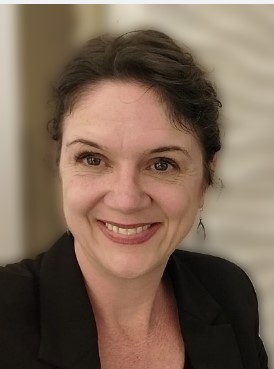
São Paulo – Diplomat Antonio Carlos do Nascimento Pedro is the new ambassador of Brazil designated to Khartoum, in Sudan. Antonio Pedro should travel to the Arab country in late July and takes in his luggage many expectations. One of them is to place Brazilian social technology at the disposal of the Sudanese, including programs for small-scale farming that take into consideration the improvement of living conditions of producers. Another is to generate exchange in the area of archaeology.
The diplomat also believes that there is much to explore in economic relations, with incentives to cooperation in ethanol and to bilateral trade. To Antonio Pedro, the trade flow between Brazil and Sudan may be much greater if there is mutual knowledge. "It is necessary to identify the opportunities for purchase and sale," said Antonio Pedro, in an interview to ANBA. The diplomat visited the offices of the Arab Brazilian Chamber of Commerce, where he was met by the president at the organisation, Salim Schahin, and by the secretary general, Michel Alaby.
ANBA: What is your trajectory in Brazilian diplomacy?
Antonio Carlos do Nascimento Pedro: I have been in the diplomatic career for 33 years. I started in South America, in Argentina, then went to China, to Havana, Cuba, and later had stints in Lima, Peru, and Geneva (Switzerland), twice. In Geneva, I participated in the Brazilian delegation to the United Nations. But this should be my first mission as the ambassador. I was invited to the post and accepted with great pleasure. Sudan is an important country for Brazil, a nation with which we want to improve our relations, a country with great potential for relations with Brazil. The idea is not to teach the Sudanese, but to improve cooperation, trade and also other areas in which there may be exchange.
The Brazilian embassy to Khartoum is recent, isn’t it?
Diplomatic relations with Sudan have existed for approximately ten years. They were promoted by our embassy in Cairo, Egypt. In 2004, Sudan opened an embassy in Brasília and, in 2006, we inaugurated our embassy in Khartoum. The relations are not so fresh, they have already been in progress for a decade, but there is space for growth. Ambassador Hélio Magalhães de Mendonça was the first and I will be the second ambassador to Khartoum.
Are you taking any recommendation from the government of Brazil with regard to your operation in Sudan?
The instruction for an ambassador to take on a post in a country with which Brazil has diplomatic relations, relations of any sort, is to improve the contact, cooperation and to try to identify themes that may be of mutual interest. Brazil has historically had, due to its formation, affinity with Africa, and we do not yet know Sudan profoundly. Sudan also knows Brazil very little and a mission, by an ambassador, in this stage, is mainly that, to improve ties, identify opportunities, not just trade, although they may be extremely important, but also cultural, of social technology, of projects that may be used by the communities.
There are several similarities between Brazil and Sudan. Both are the largest countries of their regions. Sudan is the largest African country. In terms of population, the country has around 40 million inhabitants and in area is clearly the largest, with 2.5 million square kilometres, bordering nine countries. It is a country that has historically connected the North, Egypt, to the South, the East and the West. It is a country that has a shoreline, that has direct access to the East and that has always been on the international agenda. It is a country with a millenary history.
There are areas in which Sudan and Brazil are closer, like in the agricultural area. We see many Sudanese in Brazil seeking ethanol technology. Are there perspectives for improvement?
There are already things and I see this area in a very ‘promising’ way. And when I say ‘promising’ I am not using a word that is merely diplomatic. The Sudanese are open to this cooperation and are hoping for Brazilian presence in this area, in biofuels, agriculture in general. And there is space for all sorts of cooperation. Brazil has expertise in the commercial area connected to the sector, in the agricultural area, in techniques and science and also in the area of social technology turned to communities in terms of these projects. I would also mention Embrapa – the Brazilian Agricultural Research Corporation. Embrapa is a national and international reference and may do many things, not just in great projects, but also in those that are going to positively affect the communities in areas of influence for these projects.
Sudan is developing its agricultural plan and understanding that there is an opening for Brazil to advance in this area. It is clear that, in any sector, when two countries are involved, results do not necessarily arise in the short run. Some results may come in the short run, but it is also necessary to develop talks with sustainability, forecasting the medium and long run. Relations between two countries are not built from night to day.
When you talk about social technology, do you mean the Brazilian experience in communities that plant for production of biodiesel, for example?
That too. Sudan is 80% agricultural. They have much oil, but are still characterised by subsistence farming, family farming. And we have great experience in that, including in projects for social technology, the technology that with little cost mobilizes local resources, engages the community and increases productivity. I can think of some examples: cisterns, construction of housing in rural areas, the fight against certain diseases that may be taking place, the support to subsistence farming, increasing productivity, be it in goat milk or other areas. Summing up, we have this social technology. We developed a series of activities for support to more vulnerable communities, poorer ones, and this is fully available.
How do you evaluate our trade relations with Sudan?
They are still very small. It would be fitting to explore more aspects, to boost what is already in progress, like the area for production of alcohol from sugarcane. And there you have the entire universe, not just commercial, but also science and technology, for exploration. Sudan is very open, wants to learn, to know, to understand and to apply the experience of biofuels, for example. There are things to do. There are already things. Dedini is there, for example. But there is much space for growth.
How about effective trade between Brazil and Sudan. How is it?
It is very little, an irrelevant volume, taking into consideration the potential of both sides. It is also necessary to make an effort for alleviation in the medium and long run as it is necessary to identify opportunities for purchase and sale and reciprocal knowledge. We may not have any idea of what Sudan may represent in commercial terms and maybe Sudan has no idea of what Brazil may offer and buy. This marriage of opportunities must be in the medium run. I understand that there are great perspectives. Sudan currently has the third largest oil reserves in Africa. Maybe gas, which is still very little explored there, could be an element for trade.
Is there already some activity forecasted at the embassy, any mission, trade meeting?
There is no forecast, but there is my desire for reciprocal missions. At least in two basic areas, one economic and trade and another for technical cooperation, science and technology. And on the whole, both areas in several points, join forces. This is a desire I have, to organise these reciprocal missions. Brazil has a system of political inquiries with Sudan. Now a Brazil-Sudan trade council has been established. It may also be a good platform for us to reach a more structured agenda.
And in the cultural area, we do not have much exchange with Sudan, right?
No, we do not. And there are many possibilities. For example, in archaeology. Sudan is a country with ten thousand years of history. Starting in the 1960s Sudan started developing a policy, supported by the Unesco (United Nations Educational, Scientific and Cultural Organization) for discovery of archaeological sites and important excavations. The area from Khartoum to Egypt is ancient Nubia. The Romans were there, the Ottomans, the English and the Egyptians. It is an area that was always considered strategic in the international agenda of each moment. In the eighth century it was already important, not just for trade, but also due to the strategic location and access to raw material. This area was always highly subject to this population inflow and outflow and is of great archaeological activity, with international teams. Brazil has never been in this, but we have expertise, of course, with limitation of means and resources. But understanding may be reached, for example, between the National Museum of Khartoum like the National Museum of Rio de Janeiro, in Quinta da Boa Vista, maybe with the USP (University of São Paulo). It is possible to do something, not just to provide our investigators with this experience, but also to bring the Sudanese exchange with Brazil in archaeology.
There is still in the area of archaeology another line, which is currently being called line of slavery. Brazil received an African Diaspora and there is a niche of specialists dedicated to reconstructing this history. In Brazil, in 1835, there was a revolution in Bahia, by slaves called malês, who came from the region that is currently Sudan. They were Muslim, organized, politically conscious, intellectualised and their revolution was against slavery.
How is the economy of Sudan nowadays?
Sudan is an African country that has historically fought against the lack of resources. The country has great mineral, agriculutral and land resources. But the problem is monetary, financial. Five or six years ago they started exploring oil. And the product became one of the main sources of funds in the country. But with the crisis and the reduction of oil prices, this optimistic scenery has dropped. And there is also a very interesting moment, which has to do with the economy, but is connected to politics, related to the idea of economic sharing. This is an idea that the government is applying to the south of the country and to other areas. Khartoum has always played a predominant part in the political line and after the peace agreement, in 2005, this idea of sharing riches gained body. But it is not just an idea: 50% of the income generated with oil stays in the south. And that is very important. Of course it results in a need for structuring government institutions and they are at it now.
How are your personal relations with the Arab world?
Any Brazilian has at least two roots: one Arab and one African. And I am included. I think it is not necessary, for a professional to belong to an Arab or African family. We already have this natural way of dealing with what is different. The Arab world is in our daily life. There is no way of forgetting the African world. When you are professional, the great objective is to improve the understanding between both countries. And there I include the government, societies and sectors. There is great need in several sectors, when considering the medium to long run. Sudan brings together two elements, the Arab and African.
*Translated by Mark Ament
