



São Paulo – Brazil’s exports to the Arab countries added up to just over US$ 14 billion last year, representing a 5.4% decrease in relation to 2012, according to information from the Ministry of Development, Industry and Foreign Trade (MDIC), and compiled by the Arab-Brazilian Chamber of Commerce.
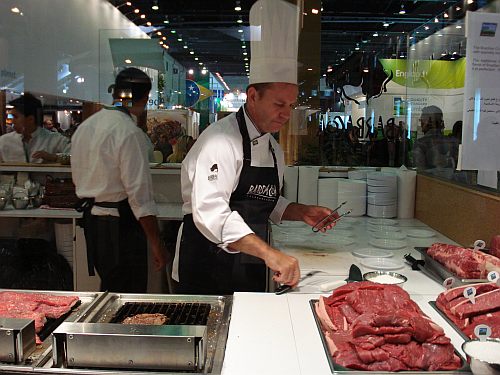
The Director-General of the Arab Chamber, Michel Alaby, commented that the Brazilian beef imports suspension by some Arab countries affected business. Saudi Arabia, Kuwait, Oman, Qatar and Iraq imposed barriers on the product after the Brazilian government disclosed, in December 2012, that an animal that died in the southern Brazilian state of Paraná in 2010 had the agent responsible for bovine spongiform encephalopathy, or mad cow disease, without, however, having ever developing the disease.
Later, the World Organization for Animal Health (OIE), declared that the risk of an outbreak of the disease in Brazil was “insignificant”, but even now, not all countries have lifted the embargo.
Alaby noted that the results may have also been affected by the declining prices of some commodities. “When analyzing the figures, it may be observed that the quantity exported dropped less than the revenues,” he stated. In fact, from one year to the next, the difference in volume shipped was of 3.2%.
The Director-General mentioned other factors that affected Brazilian exports in general, not only shipments to the Arab countries, such as the high domestic demand, therefore companies found it less interesting to export; and the volatile exchange rates, “which restricts foreign trade planning, meaning profitability is greater selling in the domestic rather than the foreign market.”
Alaby pointed out, however, the increase in poultry exports to the region, both in revenues as in quantity. The Middle East is already the greatest market for the Brazilian product. Poultry sales added up to US$ 3.15 billion, an increase by 12% in relation to 2012, with an increase by 3% in the volume shipped.
This performance was affected by the increase by 16.4% in chicken cuts exports, which reached nearly US$ 1 billion. These products have higher added value than the whole bird.
There are also new items in the Brazilian export basket, such as limes and pharmaceutical alcohol, and gold sales had a strong growth. Brazil exported the equivalent to US$ 108.34 million in gold, an increase by 103% in relation to 2012. The Arabs appreciate the metal not only for making jewelry, which is a traditional activity in the region, but also as an investment. “The artisanal work is all done there,” observed Alaby.
Among the main destinations of Brazilian goods in the Arab world, there was an increase in sales to the United Arab Emirates (5.4%) and Algeria (2.6%). There was a decline, however, in shipments to Saudi Arabia (5.4%), Egypt (18.8%) and Oman (2%).
The Arab Chamber Director-General stated that, concerned with the food safety issue, Arabs will continue importing great quantities from all over the world. He believes that the demand for foodstuff in the region will increase 5% to 6% this year. In the Gulf region, the increase may reach 4%, with about US$ 50 billion in total imports.
“The international scenario now demands more promotion by Brazilian companies,” emphasized Alaby. According to him, among the products that may have great success in the region are chocolate, candies, jam, juice and fruit, particularly tropical varieties.
Imports
On the other hand, imports of Arab products by Brazil added up to US$ 11.4 billion, an increase by 2.7% in relation to 2012. The performance was affected by the increase in purchases of crude oil, aviation kerosene, diesel oil and fertilizers, driving up the sales from the UAE, Kuwait and Morocco.
Brazil accumulated a trade balance surplus of US$ 2.6 billion with the Arabs in 2013, almost 30% less than in the previous year.
*Translated by Silvia Lindsey

