


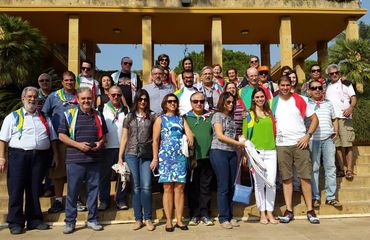
São Paulo – A group with more than 30 Brazilians of Lebanese origins is visiting Lebanon to get to know more closely the country from which their parents, grandparents and great-grandparents came. They landed early last week and stay in the Arab country until next Saturday (25th), in a trip organized by the monk of the Lebanese Maronite Order, father Silouanos Chamoun, vicar of the Saint Charbel Parish in Campinas, 84 km from São Paulo. The initiative is happening for the fifth time.
Travel plans include visits to touristic, religious and archaeological attractions, trips to regions such as North of Lebanon, which has beaches, mountains and historical places, besides the Bekaa Valley, where there’s a large Brazilian community. This Monday (20th), the group visited the Qadisha Valley, a place with several monasteries. The idea is also to show how life in Lebanon is like and to put the tourists in contact with relatives that live there.
Early last week, after the arrival, the members of the group visited The Holy Spirit University of Kaslik (Usek), in the city of Jounieh, where they visited the Latin American Studies and Cultures Center (Cecal), the campus, the main library, the Centre for Written Heritage Conservation, presented by its director, Randa Chidiac, and watched a lecture by Cecal’s director, Roberto Khatlab. He provided a series of introductory information about the Arab country.
“The group is always excited and motivated by the trip, which is beyond touristic; it’s a trip reconnecting with the roots, the origins, a meeting with Lebanon and family’s history. Father Chamoun created this bridge between Brazil and Lebanon, through which many fulfill the dream of visiting the land of their ancestors, the Land of the Cedars. An always exciting and successful trip”, said Khatlab.
The group is made of young people, students, college teachers, priests, businessmen, families, among others. They are not only from Campinas, but from other cities of São Paulo state also, such as the capital and Itú, besides the state of Bahia. The trip is non-profit and each one pays for their own costs. Each year the number of members varies.
*Translated by Sérgio Kakitani
