



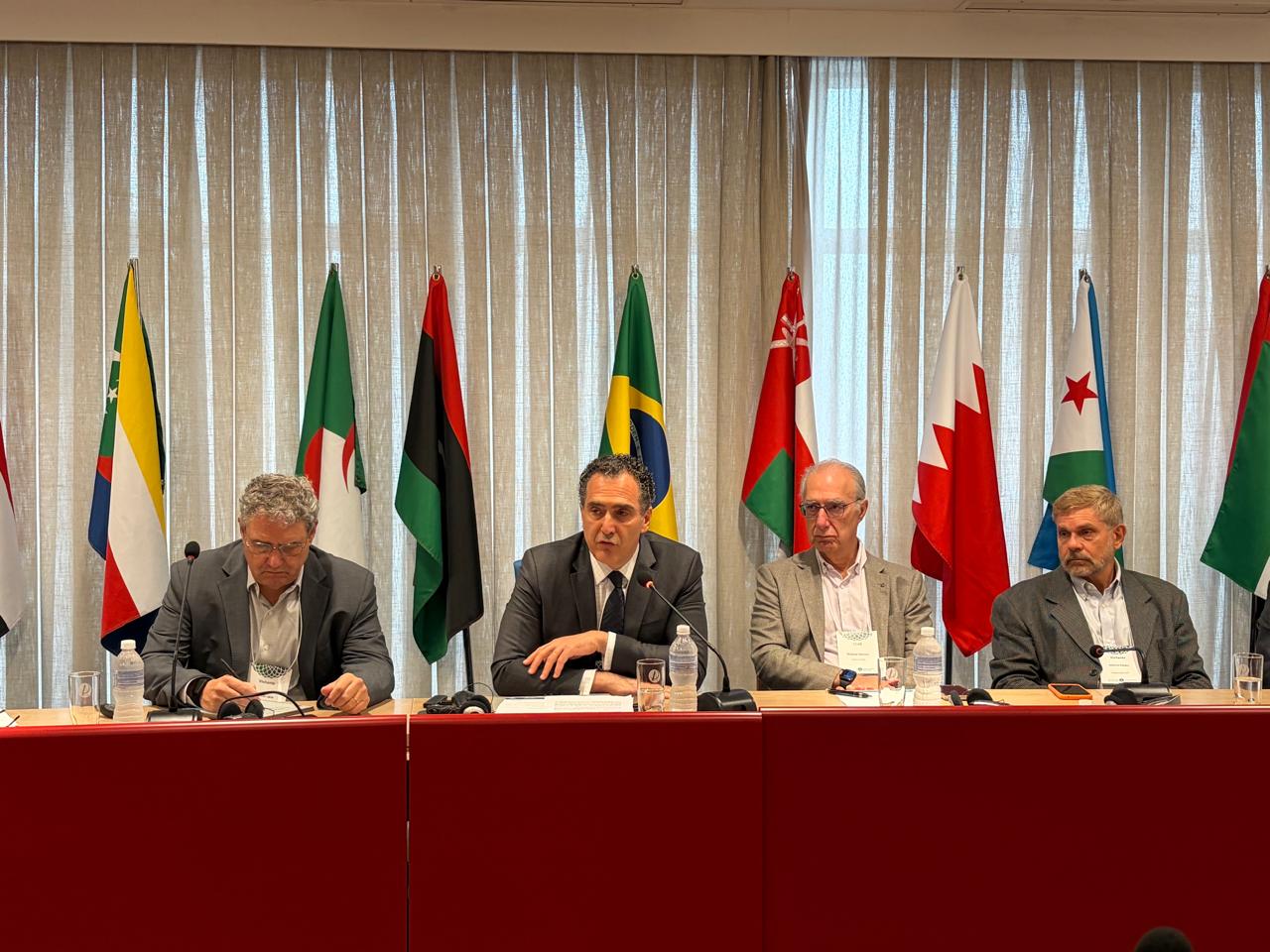
São Paulo – Senior professor and coordinator of Insper Agro Global, Marcos Sawaya Jank, said on Wednesday (11) that fertilizer supplies could be suspended in the coming months if the conflict in Iran and the closure of the Strait of Hormuz continue. Jank spoke at the event “Breakfast with Members,” held by the Arab-Brazilian Chamber of Commerce (ABCC) at its headquarters in São Paulo. The theme of this edition was “Conflict in the Middle East: Impacts on maritime transport and outlook.”
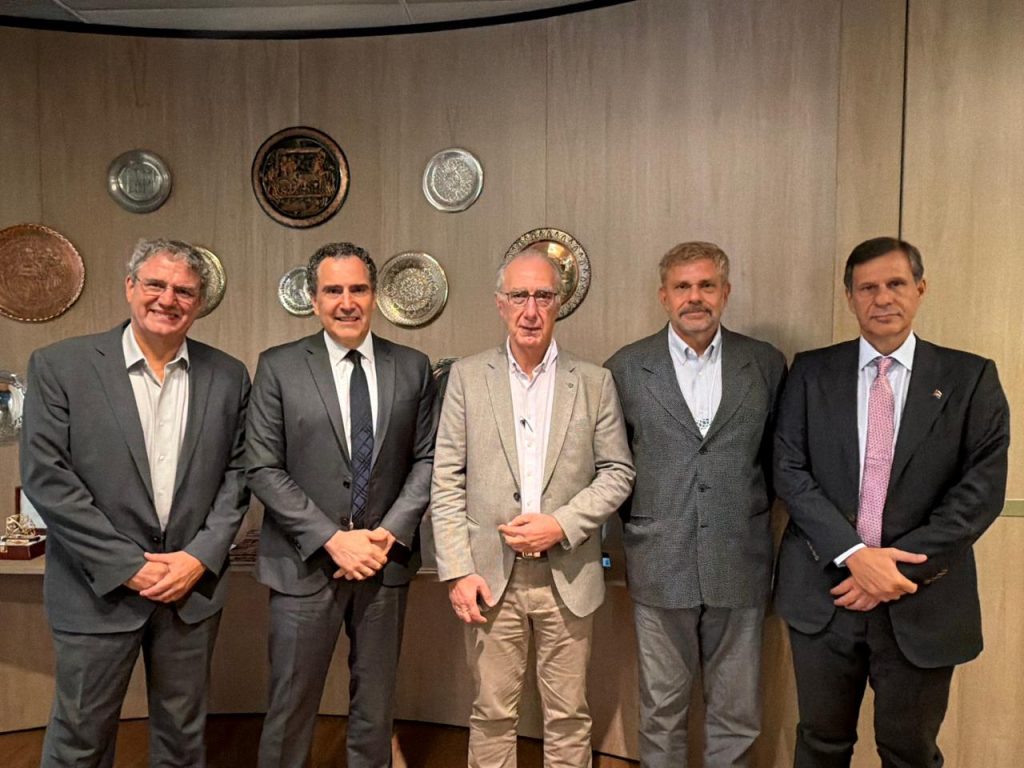
Participants in the meeting included Brazil’s ambassador to the United Arab Emirates, Sidney Romeiro; the logistics planning manager at the Port of Santos, Ricardo Maeshiro; the vice president of the logistics company One, Gilberto Santos; the director of Al Tayeb, the wholesale division of the UAE retail group Lulu, Riyad Jabbar; the general manager of Al Tayeb Group, Manzoor JB; and the operations manager of Al Tayeb Group, Husain Lokhandwala. Representatives of 40 member companies of the ABCC were also present, including food trading firms, law firms, and fertilizer producers.
In his presentation, Jank noted that Brazil is the world’s largest producer of commodities and the world’s largest importer of fertilizers. The country imports about 85% of the fertilizers it consumes, a share that can reach 90% in the case of nitrogen fertilizers.
“Fertilizer shortages mean a drop in production,” said Jank, who described the situation as “delicate.” Prices of the input, however, have already risen.
Brazil’s main fertilizer suppliers are Russia, Canada, China, Morocco, and Saudi Arabia. Not all of them, however, sell the same products. Some export nitrogen fertilizers, while others supply phosphates, for example. China also imports these products from those countries to process them domestically and then resells them to Brazil.
“Fertilizers are very sensitive for Brazil because the country imports 85%, so the situation is more serious for Brazil than for any other country with agricultural production,” Jank told ANBA after the event. “At the moment, what we have seen is an increase in prices, whether for oil or nitrogen fertilizers. It may reverse, but if there is a problem with the closure of straits (such as Hormuz) for more than a month, then what could happen is a supply problem,” he added.
The Strait of Hormuz is a shipping route used to access countries whose only outlet to the sea is in the Gulf. This is the case for Qatar, Kuwait, Bahrain, and Iraq. The UAE has most of its coastline — and some of its main ports — beyond the Strait of Hormuz.
Israel and the United States have been attacking Iran since February 28. In addition to retaliating with missile launches toward its Arab neighbors, Iran has threatened to sink ships passing through the Strait of Hormuz. As a result, the waterway is closed.
Because of this threat, the main global shipping companies have suspended deliveries to ports in the region. The vice president of operations at One, a Japanese shipping company based in Singapore, Gilberto Santos, stressed at the meeting that the company has suspended deliveries to Gulf countries, like its competitors, and has advised its clients not to ship anything to the region in the coming days.
“For cargo already on ships we have two options: one is to unload it at a safe port where it can be discharged, in many cases far from the final destination. The other option is for clients to change the destination: send it somewhere other than the affected locations or opt to return the cargo to the port of origin,” he said.
The sector is charging emergency fees for deliveries to the Gulf and the Red Sea and, in some cases, additional fuel surcharges.
Challenges beyond fertilizers
“Our recommendation is that cargo should not be sent to the port, or if it is already there, that it shouldn’t be loaded,” Santos said. “The measures are tough, but they’re meant to avoid greater impacts for exporters and importers, too.”
Saudi Arabia has ports in the Gulf affected by the Strait of Hormuz, but its western coast on the Red Sea continues to operate. The ports, however, are congested.
Brazil’s ambassador to Abu Dhabi, Sidney Romero, welcomed participants to the event, noting that many major Brazilian companies are present in the UAE. Executives from the Al Tayeb network, in turn, expressed concern about shipments—especially meat—bound for their country.
The president of the ABCC, William Adib Dib Jr., said it was able to provide an “immediate and dynamic response” to its members at a time of doubt and uncertainty. “We’re pleased to offer this immediate response, especially because we brought people who are specialists in the sector. Companies can contact the ABCC [if they need information]. And the speakers also made themselves available,” he said.
Also in attendance were ABCC’s International Relations Vice President & Secretary-General Mohamed Orra Mourad, board member Suzana Chohfi, and the institution’s former president and member of its Fiscal Guidance Council, Rubens Hannun.
Read more:
MSC offers inland cargo to supply Gulf
Translated by Guilherme Miranda
