



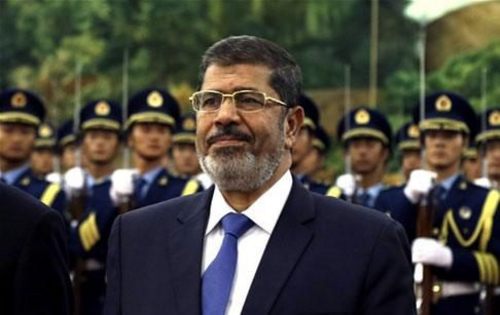
São Paulo – Egyptian president Mohamed Morsi should visit Brazil this week heading a trade delegation. On Wednesday morning (8), Egyptian businessmen should participate in roundtables with Brazilian companies at the Arab Brazilian Chamber of Commerce, in São Paulo.
According to the CEO at the Chamber, Michel Alaby, the participants should be some 25 to 30 Egyptian companies “interested in exporting, importing and establishing strategic partnerships” in sectors like auto parts, agroindustry, cement, education, renewable energy, fertilizer, natural gas, investment, recycling, ironworks, information technology and telecommunications, among others.
The event should take place from 9:00 am to 2:00 pm and enrolment is open to Brazilian companies interested in participating (see details below). “This is an opportunity to further expand trade and to learn more about new players in the Egyptian market,” said Alaby. Promotion of the meetings is by the Arab Brazilian Chamber and the Egyptian Trade Office in São Paulo.
Morsi was the first democratically elected president in Egypt after 30 years of the regime headed by Hosni Mubarak, who stepped down in 2011 after the Arab Spring protests. Among the main challenges of the head of state that was sworn in half way through last year is the social and economic stabilisation of his country. In this respect, the visit to Brazil will focus much on social and political matters.
A spokesperson for the government of Egypt, Ehab Fahmy, recently said to the official news agency of the Arab country, Mena, that the objective behind the trip is to strengthen trade, economic and industrial ties and to attract further Brazilian investment. The president is coming in the company of several of his cabinet members, including the ministers of Foreign Relations, Investment, International Cooperation, Energy, Social Action and Agriculture and Supply.
Brazil will be the last of the members of the Brics visited by Morsi, who has already travelled to Russia, India, China and South Africa, the four other members. In an interview to an Indian newspaper in March, the president said that Egypt hopes to become part of the bloc, creating the “E-Brics”.
In the post-revolutionary period, Egypt is struggling against depreciation of the country’s currency, the Egyptian pound, a reduction in the country’s foreign currency reserves and unemployment. In this respect, the attraction of foreign funds is a priority. In recent months, the country has managed to get financial aid from other nations and is studying a US$ 4.8 billion loan form the International Monetary Fund (IMF)
Trade
Egypt and the United Arab Emirates trade places as the second main Arab buyer of Brazilian products, only after Saudi Arabia. According to the Ministry of Development, Industry and Foreign Trade, sales from Brazil to Egypt generated over US$ 2.7 billion last year, growth of 3.35% over 2011. The main items shipped were sugar, beef, maize iron ore, chicken, tobacco, vehicle chassis with engines, motor compressors and standing cattle.
On the other lane, Egypt was the eighth main Arab supplier to Brazil last year, with US$ 251.5 million in business. The main items in the basket were urea, superphosphate, tyres, glass, polyethylene plates, shaving gear, cement, cotton and cotton thread, paraffin and medical products.
Service
Roundtables with Egyptian businessmen
Wednesday, May 8th, at 9:00 am
At the Arab Brazilian Chamber of Commerce
Avenida Paulista, 11th floor, Bela Vista, São Paulo
Tel.: (+55 11) 3147-4066
Enrolment and further information at e-mail [email protected]
*Translated by Mark Ament

