



Brasília – This Thursday (19th), the European Union (EU) has requested consultations under the World Trade Organization (WTO) for it believes the Brazilian government’s discriminatory tax practices have been extended – which the multilateral trade system does not allow.
As per the European bloc’s bid to the WTO, Brazil has increased product taxation, infringing the organization’s rules, so as to shelter national industries from competition. The complaint concerns home appliances made in the Manaus Free Zone, and in particular the auto industry.
The Brazilian government recently raised the Tax on Industrialized Goods on imported cars – except for Mexican- and Mercosur-made autos. The possibility of lowering the tax by up to 30% arose in 2012 with Programa Inovar-Auto, which provided for tax breaks for vehicles made using parts made by the Brazilian industry.
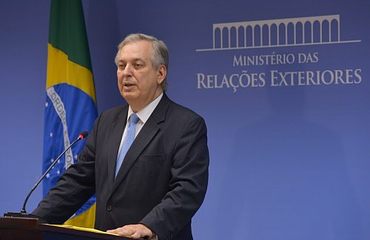
The Brazilian foreign minister Luiz Alberto Figueiredo, has said Brazil’s commercial practices are in keeping with the rules set forth by the WTO. “We are reviewing the case, but we are confident that the programs contested by the EU are in accordance with regulations, and we will prove it at the WTO,” said Figueiredo.
To the EU, the measures taken by Brazil are “selective exemptions and tax breaks for national products.” According to the EU, the issue has been discussed by the parties, but to no avail. The auto industry is a sensitive area in trade between the two regions, and it is an industry in which the European Union plans on gaining market share.
Figueiredo has said he will not question the EU’s motivations. “I do not wish to speculate on the motivations of the European Union. Their request is within the boundaries of the system, which allows countries to seek the WTO in order to settle disputes,” the minister explained.
Once the European request has been made formal, consultations will take place between the parties. If a satisfactory solution is not reached within 60 days, the EU may request that a panel be established at the WTO to make a decision.
Negotiated solution
The WTO director-general, Brazil’s Roberto Azevêdo, has said there will likely be a negotiated solution to the consultations request made by the EU.
According to him, “a large number of consultations requests [to the WTO] do not lead to litigation.” Azevêdo explained that Brazil will have a set period of time to decide whether it agrees with the EU’s consultations, and the response will probably be positive. “[The consultations] usually go through. Brazil itself has requested consultations in the past which did not turn into litigation. It is not a far-flung supposition to believe there are hopes of a negotiated solution,” he said.
Azevêdo said he could not comment on the worth of the EU’s claims. He made the statements at a press conference at the headquarters of the National Confederation of Industry (CNI), in Brasília, after meeting with the CNI chairman Robson Andrade. It was the director-general’s first meeting with the private sector since the trade facilitation agreement signed in Bali, Indonesia.
Robson Andrade believes there are no issues as pertains to auto industry incentives in Brazil, most of which are under the scope of the Inovar-Auto program. “I do not think the Brazilian program warrants a discussion at this level. It is part of the development policy of a very important industry in Brazil,” he said.
The European Union’s consultations request comes in the wake of increasing negotiations between the EU and the Mercosur, underway for 15 years now. In January, the two parties have set the end of the year as the deadline for exchanging lists of items for which they were willing to award tax breaks. The Mercosur countries planned on submitting their offer list this week.
The EU, however, has requested a postponement of the deadline to next year. The Mercosur calling on European countries to withdraw agricultural subsidies. The European Union wants south American countries to remove protectionist barriers against its industrialized goods. The Brazilian minister of Development, Industry and Foreign Trade, Fernando Pimentel, made a request for the Europeans to act swiftly after the postponement.
*Translated by Gabriel Pomerancblum

