



São Paulo – Four films on the Arab world are part of the program of the 21st International Documentary Film Festival It’s All True, which takes place in São Paulo and Rio de Janeiro from April 7 to 17.
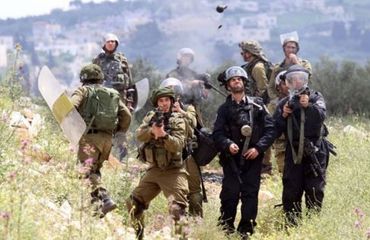
The Palestinian production I Have a Weapon, by director Ahmad Shawar, cover the story of the Kafar-Kaddoum village, which was expropriated from the Palestinians by the Israeli army for the creation of a Jewish settlement in 2002. The Israeli army also closed the access of Palestinians to the main road that leads to the village. Since then, the local inhabitants do weekly protests to claim their rights.
The documentar Egypt’s Modern Pharaos (Mubarak/Nasser/Sadat), by director Jihan El Tahri, is a French production that covers key episodes of the Arab country’s political history since 1952 up to the protests in Tahrir Square in 2001. The movie shows the life journeys of three important Egyptian presidents: Gamal Abdel Nasser (1954-1970), Anuar el-Sadat (1970-1981) and Hosni Mubarak (1981-2011), showing their relations with the Muslim Brotherhood and the army.
O deserto do deserto (The desert of the desert), Brazilian documentar by Samir Abujamra and Tito Gonzalez Garcia, shows how life is in Western Sahara. The territory was a Spanish colony until 1974. With the departure of the Spanish, expectations called for the organization of a referendum on the self-determination of the territory. However, it was handed to Morocco and Mauritania (withdrawal in 1979), decision that is the source of conflicts until today, since Morocco incorporated Western Sahara to its territory.
The Sniper of Kobani shows the daily life of Kurdish sniper Haron in the Syrian city of Kobani, on the border with Turkey. The Dutch documentary, by director Reber Dosky, is set in the city that is the stage of several clashes between Kurdish fighters and members of the Islamic State. In the film, Haron, who is seen as a hero in his town, reflects on the solitude of his work, his dreams and nightmares.
The docs I Have a Weapon and The Sniper of Kobani are part of the Best Documentary in the Short Film International Competition. The festival will screen nine films never shown in Brazil. The winner will receive BRL 8,000 (USD 2,213) and the festival’s trophy, created by visual artist Carlito Carvalhosa.
The winners of the Brazilian and international Short Film categories qualify to have their works examined by Hollywood’s Academy of Motion Picture Arts and Sciences to compete for an Oscar nomination in the Best Short Film – Documentary. This is the only South American festival that offers this opportunity. In all, the festival will screen 85 movies from 26 countries, with 22 being world premieres.
All the festival’s screening are admission-free. The complete program is available at http://etudoverdade.com.br/br/programacao.
*Translated by Sérgio Kakitani

