



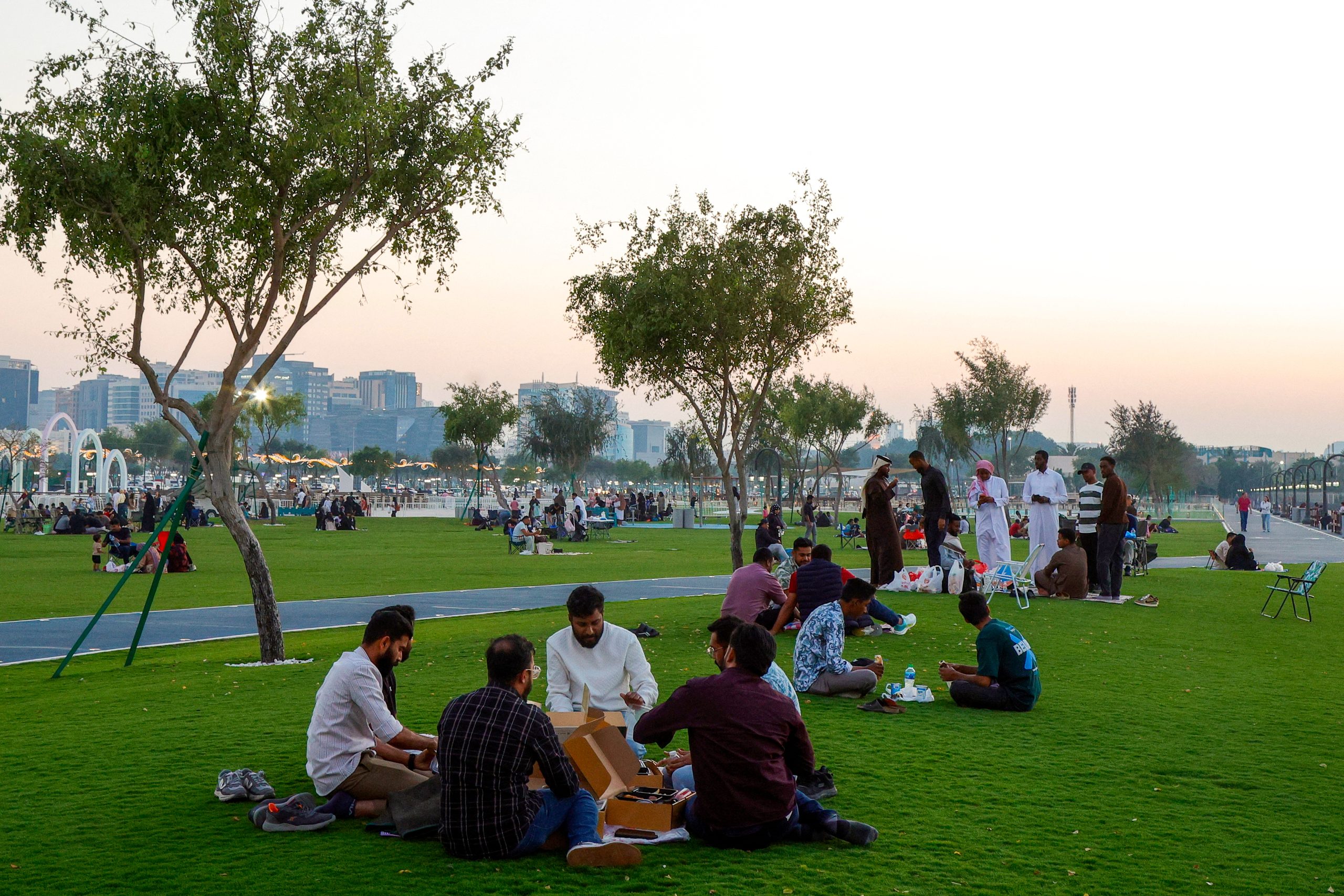
São Paulo – During Ramadan, the holy month of Islam, remittances sent by foreign workers in Qatar to their home countries reach their peak, Qatari state news agency QNA reported. The religious period began on February 18.
During this month, in addition to fasting from dawn to sunset, Muslims gather for communal evening meals and are encouraged to practice charity and solidarity. Ramadan concludes with the celebration of Eid al-Fitr, marked by public holidays in Muslim countries.
The QNA report cites rising living costs, preparations for Eid al-Fitr, zakat payments, and donations as factors behind the increase in remittances. According to the agency, the pace of money transfers rises considerably, boosting activity at exchange houses. Zakat is the mandatory annual donation of 2.5% of accumulated wealth that financially able Muslims must pay each year.
Representatives of exchange companies told QNA that remittances rise between 25% and 30% during Ramadan and Eid al-Fitr compared to the rest of the year, with the highest levels recorded in the last ten days of the month, close to Eid al-Fitr. They noted that transfers are currently undergoing changes driven by modern technologies and artificial intelligence.
The CEO of an exchange company, Bashar Al Wuqfi, said it records an increase of about 25% in remittances compared to the rest of the year. According to him, to meet demand, the company takes measures such as increasing liquidity to cover withdrawals from banks and foreign correspondents and enhancing operational capacity by hiring staff and extending business hours.
Financial remittances sent by foreign workers in Qatar to their home countries represent a significant volume of money. In the third quarter of last year, they totaled QAR 10.76 billion, equivalent to USD 3 billion at the current exchange rate, up 10.8% compared to the same months of 2024, according to Central Bank data cited by QNA.
Read more:
Books help explain Ramadan to children
Translated by Guilherme Miranda

