



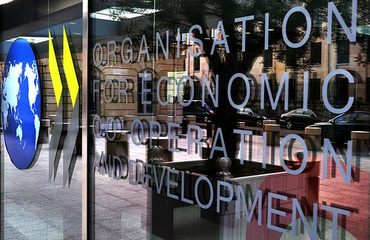
São Paulo – The global economy is moving forward, but the ghost of recession is still around, especially in the Euro Zone, according to estimates released this Wednesday (29th) by the Organization for Economic Cooperation and Development (OECD). According to the Economic Outlook report, the global Gross Domestic Product (GDP) should be up 3.1% and 4% in the next one.
Although the global average is positive, estimates vary considerably from region to region, which, according to the OECD, goes to show that economic recovery is taking place in an uneven fashion.
While the United States economy is expected to grow by 1.9% in 2013 and 2.8% in 2014, the Euro Zone’s should be down 0.6% this year and up only 1.1% in 2014. “Historically high unemployment remains the most serious challenge facing governments,” according to the organization.
The OECD advises that “urgent action” should be taken to reduce unemployment, which has reached “dangerous levels” in some countries. The problem is particularly serious in Europe, where unemployment should keep rising until next year; in the United States and Europe, unemployment is expected to plateau, according to the OECD.
The GDP growth projection for the OECD member countries, which include some of the world’s leading economies, is 1.2% in 2013 and 2.3% in 2014, while non-member countries should see 5.5% and 6.2% rates.
The OECD includes developed countries and some developing ones, but not major emerging economies such as Brazil, Russia, India and China, a group collectively known as the Bric. In that sense, the report points to a trend of ever-increasing growth in developing countries.
Brazil
Although Brazil is not a member, the OECD sets forth that in order to boost growth, the country must minimise “structural constraints” by improving infrastructure, reducing the tax burden, lowering the complexity of the tax system, and increasing long-term private credit. Long-term financing to major projects is highly dependent on the state-owned Brazilian Development Bank (BNDES), and sees little input from private banks.
The OECD also warns that the Brazilian federal government’s measures to reduce competition from imported goods in the domestic market, such as raising taxes, should detract from the development of productivity in the medium term, and “should be reconsidered.”
In Brazil, unemployment is not a problem at this time, because the rate is the lowest ever, but inflation remains higher than the 4.5% target set by the government, which is cause for concern. This Friday, the Brazilian Institute for Geography and Statistics (IBGE) announced that the country’s GDP was up 0.6% in quarter one from quarter four 2012, and up 1.9% from quarter one 2012.
Translated by Gabriel Pomerancblum

