



São Paulo – The National Committee for Refugees (Conare), linked to the Ministry of Justice, approved this Monday (21st) an extension of the time period for the special visa to those asking for asylum coming from conflict-torn Syria. The measure was adopted on September 2013 and would expire Wednesday (23rd), but was extended for two more years.
Conare is formed by officials from the ministries of Justice, Foreign Relations, Labor and Employment, Health and Education, besides the Federal Police, the Office of the United Nations High Commissioner for Refugees (UNHCR) and the non-governmental organization Cáritas Arquidiocesana from São Paulo and Rio de Janeiro. The extension of the time period for the special visa was unanimously approved.
The special visa reduces red tape so Syrians and those impacted by the conflict taking place in the Arab country since 2011 can travel to Brazil and ask for asylum in Brazilian soil. To request the visa, those applying must prove to be of a nationality affected by the Syrian conflict and present an identification document in the Brazilian embassy in the country in which they are located.
Brazilian representations in Lebanon, Turkey and Jordan are the ones that have been receiving the highest number of requests for the special visa. To obtain a regular visa, the citizen needs to present other documents, such as proof of stay and livelihood in Brazil.
Upon arriving in Brazil, the holder of the special visa will be allowed to apply for asylum. After that, they will get a provisional permit to settle in the country with his family and travel across the national territory. Not all of the applicants who get the special visa, however, request asylum in Brazil. Once he or she is in Brazil, the special visa holder can leave the country without settling here; they can also obtain the special visa and not travel, as well as travel without registering as a refugee. Since 2013, 7,752 special visas have been issued.
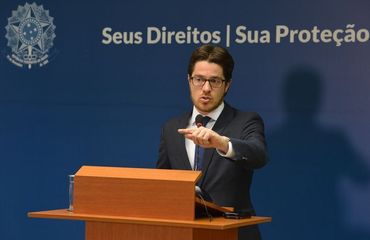
Also this Monday, the Conare president and National Secretary of Justice, Beto Vasconcelos, said a partnership has been proposed for working in tandem with the UNHCR in areas near the conflict, for speedier processing and issuance of special visas. The procedures to be adopted in this international partnership with the UNHCR will be outlined alongside the United Nations headquarters in Geneva, Switzerland. Another partnership with the UNHCR, already in effect in Brazil, decentralizes the Conare’s decisions to units in the Brazilian cities of Porto Alegre, São Paulo and Rio de Janeiro.
At the meeting, Conare approved the asylum requests of 130 new applicants, 20 of them Syrian, driving up the number of refugees recognized by the Conare to 8,530 people –2,097 of whom are from Syria.
*Translated by Sérgio Kakitani & Gabriel Pomerancblum

