


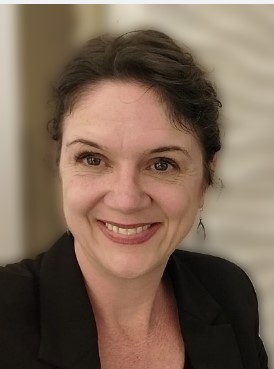
São Paulo – United States-born and of Lebanese descent, John Tofik Karam will launch today, in Brazil, the book "Another arabesque – Syrian-Lebanese ethnicity in neoliberal Brazil," by publishing house Martins Editora. The work, which has already been the subject of an article on ANBA, is the result of a doctoral thesis by the author about the Arab community in Brazil, and deals with the acknowledgement of the value of Arabs in the country, which took place in the late 20th century. The launch will happen at 05:00 pm, at bookstore Martins Fontes, on Patriarca street, in the city of São Paulo, and will count on the presence of the writer.
Karam’s family history comprises Brazil, Lebanon and the United States. The author’s maternal grandmother, a daughter of Lebanese parents, was born in the city of Porto Velho, capital of the state of Rondônia, moved to Lebanon at age ten and, further on, when she got married, she went back to America, this time to the United States. The writer was born in the United States, but this integration of different cultures has always been present in his family life, and motivated him to write about the Arabs in Brazil.
In the book, Karam narrates how the image of the Arabs, who used to be marginalized for being regarded only as good merchants, started having its value acknowledged in the neoliberal age, when capitalism reached its peak. The thesis of the Lebanese descendent has already been published as a book in the United States in 2007, and now will have a Portuguese version, translated by Denise Bottman. Karam holds a doctorate in Cultural Anthropology from the Syracuse University.
He worked on the issue for three years, at the university itself, from 1997 to 2000, and stayed in Brazil from September 2000 until late 2001 conducting field research. At that time, Karam had a scholarship from the United States Department of Education. He interviewed approximately 100 people, among them merchants, housewives and autonomous workers of Arab origin.
Currently, the author is an Assistant Professor of Latin American Studies at the DePaul University, in Chicago. In addition to the doctorate, he also holds graduate and postgraduate degrees in Anthropology. He was born in the interior of the state of New York, in a city named Utica. Part of his family, however, lives in Brazil, in the states of Pará and Rio de Janeiro. Read below an excerpt from Karam’s book:
I started to learn what it is to be an Arab in Brazil when I went to São Paulo to conduct preliminary research in São Paulo, in June 1999. I recall that, two days after arriving, I was at a friend’s apartment downtown and I called up some contacts. One person accepted to schedule an appointment: the editor-in-chief of Chams, a magazine of the Arab colony. In that first week, he shared his ideas about the "colony," listed the events that were to take place in the clubs and placed me in touch with executives and businessmen. It was with those reflections, meetings and references that I was formally introduced to the Arab experience in Brazil. In those days and in months that followed, I was sometimes mistaken for a journalist, and I felt like one, interviewing or chatting away with autonomous workers and covering their parties and meetings. With a notepad in my pocket, more than once I found myself standing beside other journalists – ethnic and national – taking notes of long speeches and engaging in interesting conversations.
Service:
Launch: " Another arabesque – Syrian-Lebanese ethnicity in neoliberal Brazil"
Date: March 12, at 05:00 pm
Place: Martins Fontes Patriarca bookstore, Patriarca street, 78 –Lutetia Building
*Translated by Gabriel Pomerancblum
