



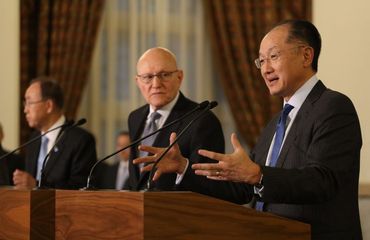
São Paulo – Ban Ki-moon, UN’s secretary general, and Jim Yong Kim, president of the World Bank (IBRD), and Mohamed Ali A-Madani , president of the Islamic Development Bank (IsDB), started this Thursday (24) a trip to Lebanon, Jordan and Tunisia to sign agreements and partnerships. The trip is organized to support some of the most affected countries by the Syrian conflict.
In Lebanon and Jordan, the heads of the UN and the IBRD will visit refugees and the communities now giving shelter to them. In Tunisia, they will discuss the process of democratic transition brought by the Arab Spring, movement that started in Tunisia in December 2010.
According to information released by the World Bank, the organization will announce funding of USD 200 million to Lebanon to promote job creation and support the development of Education.
The IsDB signed five agreements with the Lebanese government that reached USD 373 million. The money will be used in infrastructure and development projects with a focus on, especially, actions for the benefit young people.
In addition to these, IsDB launched a program through which 2 million of Syrian students that are out of the home countries will gain access to education via digital platforms using Syria’s school curriculum. This Thursday, the heads of IBRD, UN and IsDB met with Lebanese prime-minister, Tammam Saeb Salam.
“Our partnership is especially focused on young people. They are a source of immense potential and can be an engine of growth if provided with an education that teaches relevant skills and open and dynamic economies that allow them to use those skills. If we continue to fail them with poor education and a lack of opportunities, their frustration will be an ongoing source of instability”, said Al-Madani, according to information from the World Bank.
Together, the IBRD’s president and the UN’s secretary general will also visit Jordan and Tunisia. In these countries, they will meet with local authorities and representatives of the corporate sector and social society to discuss the impacts of the Syrian conflict.
In these countries, new announcements for the expansion of the education system and for job creation are expected. With Tunisian authorities, the heads of IBRD and UN will discuss ways to help the country in its democratic transition.
*Translated by Sérgio Kakitani

