



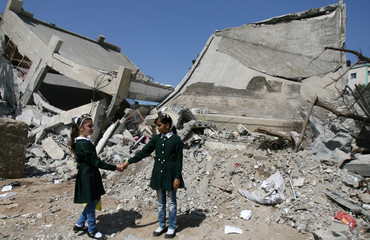
São Paulo – More than 13 million children and teenagers are being prevented from attending school because of conflicts and political upheaval in the Middle East and North Africa. The data is part of the report Education Under Fire released this Wednesday (3rd) by the United Nations Children’s Fund (UNICEF). The document covers the impact of conflicts on education in nine countries: Syria, Iraq, Lebanon, Jordan, Turkey, Yemen, Libya, Sudan and Palestine.
According to the report, attacks on schools and education infrastructure are one key reason why many children do not attend classes. In Syria, Iraq, Yemen and Libya alone, nearly 9,000 schools are out because they have been damaged, destroyed, are being used to shelter displaced civilians or have been taken over by parties involved in the conflict. The fear of sending the kids to school because of what might happen to them on the way is also one of the reasons.
There is also the issue of refugees. In Jordan, Lebanon and Turkey, more than 700,000 Syrian refugee children are unable to attend school because the schools are overcrowded and can’t accept new students. “It’s not just the physical damage being done to schools, but the despair felt by a generation of schoolchildren who see their hopes and futures shattered”, said Peter Salama, Regional Director of the organization for the Middle East and North Africa, in the document released by UNICEF.
UNICEF highlights several initiatives that could alleviate the problem and help children to learn even in the most desperate of circumstances, such as self-learning and expanded learning spaces.
The report also said that the funding for the area is not enough to attend the growing needs. The organization also calls on the international community for the expansion of informal education services to be offered to these vulnerable children, provide more support to national education systems in conflict-hit countries and among refugees, and advocate for the recognition and certification of non-formal education services.
*Translated by Sérgio Kakitani

