



São Paulo – The Organizing Committee of the Rio 2016 Summer Olympic Games, set to take place in Rio de Janeiro next year, expects to profit R$ 1 billion (US$ 248 million) from sales of exclusive licensed merchandise. From this total, 7 to 10% should come from international sales. So said the Committee’s Licensing and Retail director, Sylmara Multini, who attended a retail sector event this Thursday (1st) in São Paulo.
So far, licensed Rio 2016 products are available from six brick-and-mortar stores already in operation in Brazil, as well as online, but only for the domestic market. Online sales to other countries will begin in February, Multini told ANBA.
The event in São Paulo was held to introduce retailers to the 3,000 official Olympic Games products available so far. The intention, however, is to reach 8,000 licensed items. Overall, 50 million Rio 20160-branded products are expected to be sold.
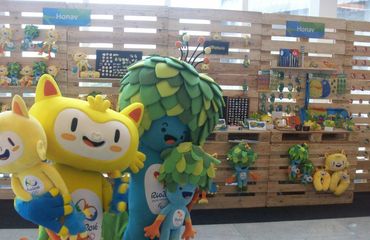
Those at the showroom for storeowners saw a broad variety of Rio 2016-branded items such as towels, glasses, pens, pins, magnets, medals, coins, key chains, flip flops, beach blankets and others. Of course, stuffed toys of the official mascots of next year’s Olympics, Vinícius & Tom, were also there.
For those still unfamiliar with the mascots’ countenances, it’s worth noting that Vinícius is an amalgamation of several animals from the Brazilian fauna, whereas Tom is a combination of different species of the national flora. Honav, the company with the most licensed Olympics products, is the exclusive manufacturer of stuffed mascot toys. The company offers over 1,000 Rio 2016 products.
“We are certain that Vinícius and Tom will account for some 25% of our sales,” Multini said. But the mascots are not available only in stuffed toy form; they are also on backpacks, key chains, towels and other assorted items, including Lego toys.
According to Multini, so far, the Rio 2016 Organizing Committee has struck partnerships with 52 brands for production of licensed items, with the final goal being 70 companies. The Committee is still seeking partners to produce music, photographs, wine, chocolate, biscuits, hard candy, chewing gum and books.
In order to prevent counterfeiting of Olympics products, the Committee is working to oversee the market and fight piracy. “The Brazilian Federal Revenue Service has the photos of all our products. If anyone tries to get in [Brazil] with an unofficial brand, they will fail,” the executive said. Multini also called on retailers to check for authenticity before buying. “All our products have a holographic sticker. It guarantees that it’s a Rio 2016 product,” he said.
Renata Lasalvia, the Retail manager for the Rio 2016 Organizing Committee, introduced to the public a cartoon series featuring the mascots Vinicius & Tom. The 32-episode series is shown on Cartoon Network and should also be featured on Brazil’s TV Globo, the largest broadcast TV network in the country. The goal is to win over children’s hearts while boosting sales. “As the mascots make their way into the imagination of children, you get a bigger public and more sales opportunities,” she said.
The Olympics craze has even crept into the national currency. In partnership with Casa da Moeda, the Brazilian mint, to produce 320 million R$ 1 coins featuring Olympics-related images. Additionally, the Central Bank will produce collectible silver and gold coins.
According to Lasalvia, there are plans for 26 official Rio 2016 stores. By the end of this year, 10 of them should be up and running. In addition to the official points of sale, the Olympics products should be available at over 40,000 outlets across Brazil.
*Translated by Sérgio Kakitani & Gabriel Pomerancblum

