



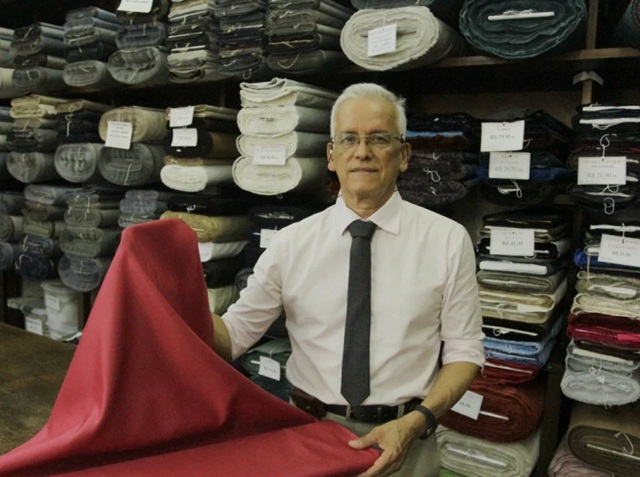
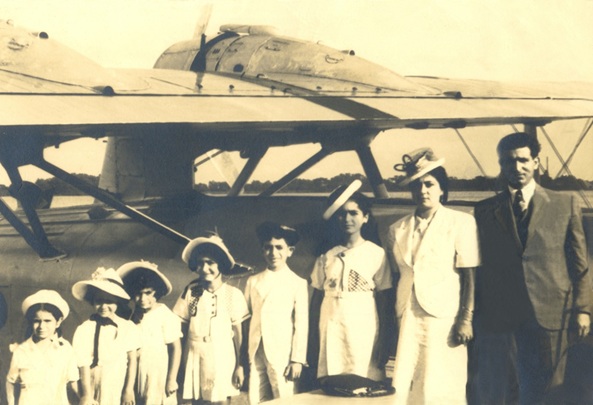
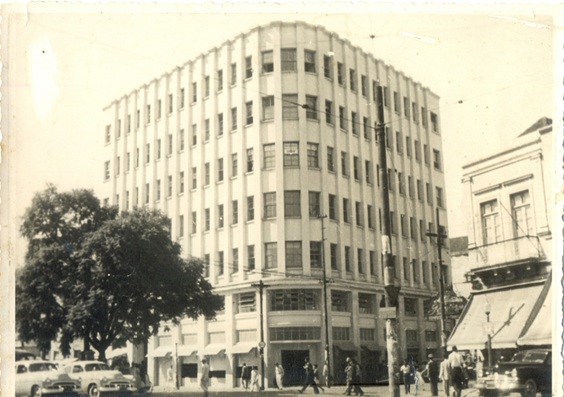
São Paulo — When he arrived in Porto Alegre in 1923, Raphael Kalil Dabdab was already an experienced tailor, despite being only 23 or 24 years old. He soon opened a tailor shop on the former Rua da Ladeira (now General Câmara). He must have noticed a strong demand—both his own and that of his peers—for fine, varied fabrics, and the tailor shop eventually became a store focused on serving tailors. In the 1940s, the business moved to the traditional corner of Voluntários da Pátria Street and Praça Parobé, in the heart of Porto Alegre’s historic downtown.
“There were no large department stores or retail chains like there are today,” says DabDab administrator Sérgio Martins, the store’s longest-serving employee, who has worked at the company for 40 years. “And for a long time, many people relied on tailors to have their clothes made to measure.” As tailors became scarce, the store began serving new audiences, such as clothing manufacturers and dressmakers (who never went out of fashion).
Raphael DabDab had six children. Of these, Elias and Kalil ran the business, with the latter managing a branch on Rua dos Andradas for thirty years (1962–1992). At one point, Elias bought out his siblings’ shares. As he had no children, the store is now inherited by his partner, who is in her nineties. Since Elias’s death in 2016, Martins himself has taken over the administration.
Martins, who began his professional life at a watch shop (another field that has virtually disappeared) at the age of 13, also worked as an office assistant in banks. “Back then, you just had to cross the street and jobs would rain down,” he recalls. He joined Tecidos Raphael DabDab to help with accounting, knowing nothing about fabrics. Today, he speaks fluently about linen, cashmere, tropical wool, and tricoline. He knows where each comes from and laments that Brazil no longer produces fabrics as it once did.
At 68, married to a woman of Syrian descent (a coincidence, as he was already married to her before joining the store) and with one son, Martins is already retired, but even aware of the difficulties faced by the sector, he still believes in the store’s potential. “Elias wasn’t very fond of technology—it was a struggle to get him to buy a computer for the accounting—but now we even sell via WhatsApp,” he says.
Martins holds many memories of his boss, including learning how to make cigars and labneh by following Elias’s step-by-step instructions. The learning took place during a visit by a Syrian consul to his boss’s home, which required intense preparation—and Martins was there helping, even in the kitchen. “I love cooking, but Arab cuisine is very labor-intensive, so I prefer to buy the kits sold here downtown,” he says.
Two floods and a pandemic
Despite strong Asian competition, especially from China, and the growing fast-fashion market from the 1980s and 1990s onward, the store kept its doors open in the same style as always—many of the furnishings, in fact, are the same as a century ago (or nearly so), which, Martins says, attracts curious visitors. “It’s a true museum, as if stepping back in time,” says the manager, who has lived through many stories there. Being a store with a historic feel but offering a fabric mix that meets today’s customers is a real asset.
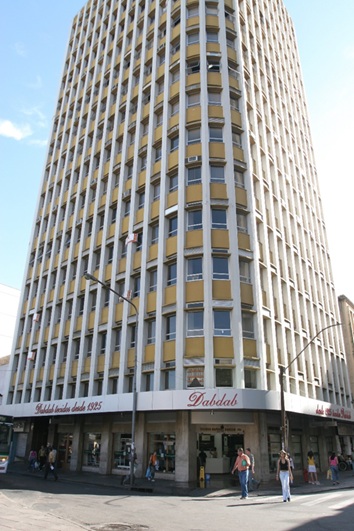
Beyond global competition, the store survived two floods—in 1941 and 2024—and a pandemic. Closing during the coronavirus outbreak without e-commerce sales was a blow, but manageable. Loyal customers and WhatsApp sales helped. Yet nothing was as impactful as the 2024 flood.
The muddy floodwaters that swept through downtown Porto Alegre reached 1.5 meters inside the store. According to Martins, the loss amounted to millions. “We lost almost everything. Many fine fabrics from England and Italy turned to waste,” he laments. Amid the chaos, with employees having to handle cleaning, repairs, and painting themselves due to a lack of available labor, Martins recalls a touching moment, “We were there cleaning, saving what we could, when a longtime employee looked at me and said: we’re going to make it to 100 years. That was a real encouragement for me.”
On December 23, 2025, without much fanfare, Martins and the other five employees of Tecidos Raphael DabDab celebrate the store’s 100 years of history and perseverance.
Read more:
Collection unveils new facts on Arab immigration to Brazil
Report by Débora Rubin, in collaboration with ANBA
Translated by Guilherme Miranda
