


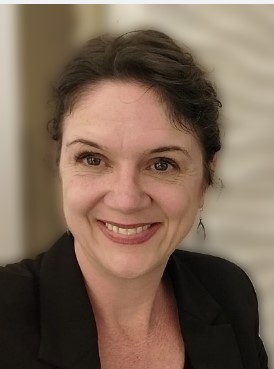
São Paulo – The Saudi vice minister of Culture, Abdulaziz Alsebail, says that the government of the country is working for Saudis to learn more about Brazilian culture. In March, Brazil was the guest of honour at the Riyadh Book Fair. Alsebail believes that there is much to be done for cultural exchange between South American and Arab countries. In order to make it viable, he suggests for Brazilian and Saudi companies involved in bilateral trade to support cultural projects.
ANBA – We are aware that the traditions and habits of Saudi Arabia are very different from those of Brazil. What is the world of culture, of cinema, of literature like in Saudi Arabia?
Abdulaziz Alsebail – Saudi Arabia is like any other country in that respect. There are all types of arts and literature. As a matter of fact, when it comes to novels, we have great male and female writers. One of our writers (Rajaa Alsanea), for example, had her book translated into more than 26 languages. It is entitled Girls of Ryadh and it is about four girls, how they communicate, how they relate to men. It paints a picture of society, of interaction. We also have great writers whose books were translated into English, French, some into German. There are also writers of tales. I can tell you the names of 40 novelists and some 50 to 60 writers of tales. As for poetry, it is lies within our hearts. For the Arabs, poetry was the main literary genre, ever since the period before Islamism and, until this day, poetry is a very important genre in the Arab world. With regard to new arts, other types of art, we have paintings, for instance. We have many artists, men and women, and an association that includes 400 artists. They promote activities in Saudi Arabia and abroad.
Which is the main type of art in Saudi Arabia? Painting, writing?
Painting and also calligraphy. Calligraphy has always been very important to Arabs, because Muslims spent a lot of time fearful of drawing animals or living creatures. Hence they used calligraphy, different types of beautiful writing.
The Saudis are large buyers of art, especially paintings, in the international market. Are they educated to appreciate art or is it a feature of the population?
We have artists and we have people who appreciate art. They are also very wealthy. They enjoy art and collect it. We have art schools, colleges that teach art lessons. Other simply buy out of personal preference. They take courses. We also have many artists who took courses, who went to school in Italy, France, the United States. If you see their work, it probably looks like the work of any other artist. Maybe the exception is that some are very connected with tradition. This tradition is present throughout all of the Arab region.
What do Saudis know about Brazilian art? Are you familiar with our books, our films?
Well, unfortunately, the main thing that Saudis know about Brazil is sports, especially football. We have many Brazilian players in Saudi Arabia. The people in Saudi Arabia do not know much about Brazil. That is why we in the Ministry of Culture are trying to open ourselves up to the Brazilians, as well as to other cultures, and we believe that Brazil is one of the great nations, has a great history, a great culture, and our citizens must become acquainted with that culture.
One of the measures we adopted was to have Brazil as a guest of honour at the Riyadh International Book Fair, in March. Four Brazilian professors and writers went to Saudi Arabia. Some Brazilian films were screened. Paulo Farah (writer and director of library Bibliaspa) was there. They gave lectures about Brazil.
The book fair lasted ten days, from March 3rd to 13th. We gave Brazil a large stand at the fair. There, films were shown, books, some of them translated (into Arabic), such as novels by Paulo Coelho. He is very well known there. We made a short movie that is being shown to the population. They really like the Samba, the dancing, the coffee factories. Almost a million people visited the Brazilian stand.
The Fikr magazine (coordinated by Paulo Farah, of Bibliaspa) is going to publish Saudi articles, tales and poetry. It will have a special edition on literature in Saudi Arabia.
What is your opinion about the meeting of ministers of culture from Arab and South American countries in Rio?
I think that it was very positive. We actually feel that all of the South American countries are enthused, and would like to have stronger relations with the Arabs. We believe that we have many ideas in common, as well as a certain heritage. We need further cultural activities to understand each other better and become closer.
Every region has a highly valuable culture. It is our role, as professionals, to help the people know that. That is why we discussed, with Michel Alaby (the undersecretary general of the Arab Brazilian Chamber of Commerce), some ideas for Saudi cultural activities here in Brazil, and some Brazilian cultural activities in Saudi Arabia.
What do you think Brazil and Saudi Arabia, or South America and Saudi Arabia, can do together in this cultural field?
We are aware that there are lots of trade between Brazil and Saudi Arabia. I think that the companies involved in that trade must support cultural activities. That is what we need. Unfortunately, we know so much about North America, about Europe… In the case of South America, however, we really appreciate it, really love it, but we do not know much about it. The time has come.
Saudi Arabia today is not like it was 20 years ago. The country is much more open to the world. King Abdullah promoted two large meetings, one of them in Madrid, turned to dialogue between different religions and civilisations. The second meeting took place at the UN headquarters last year. This gives an idea of how all of Saudi Arabia, the leaders, the people, are interested in getting to know other countries and open their minds and hearts to other cultures.
We believe that no culture is superior to another. Every culture has its own features and values. We must learn more about different cultures, as it will lead us to understand one another better, and cooperate. We believe that every religion, every culture would like to see peace on Earth. Thus, they all must cooperate to create the happiness of people and Humanity.
Will the next edition of the Alliance of Civilizations, which will take place in Brazil, be important for the cultural field?
Definitely. It is very important because some people say that there is a conflict between civilizations. Some people say that the Western civilization, or the American civilization, is going to prevail and all others will disappear. We must work together for these civilizations to coexist well and learn from one another.
Any person who knows more than one language is more open-minded, as a result of experience. Such a person knows more of other cultures. It is our duty to learn more languages. Presently, we are encouraging people to learn Portuguese in Saudi Arabia and Arabic in Brazil. This is very important.
Are there Portuguese courses available in Saudi Arabia?
Not yet, unfortunately. We have courses on many languages: Japanese, Chinese, German, French, Spanish. Portuguese has not arrived yet, but it will.
How about schoolchildren, do they learn Arabic and English only?
Yes. The main foreign language in school is English, however some private schools also teach French.
In your opinion, what was the main decision made during the meeting?
There are so many projects. One of them is translation. We have a Brazilian centre to help with translation. In Tangiers (Morocco), we have the (project for building the) centre of South American culture. There is also a library in Algiers (which is going to be built). The whole project is concluded now, and they are building this large library. The entire idea of cultural cooperation started a few years ago. We have several projects for the coming years, but we need to work a lot for the results to come.
Is there a main field of interest to Saudi Arabia in this cooperation? Literature, cinema?
As a matter of fact, Saudi Arabia is involved in all fields. We are interested in all of the projects. We will certainly take part in all of them.
Is this your first visit to Brazil?
Yes. I was quite surprised. I was very impressed during the days that I spent in Rio de Janeiro. The city is beautiful, very organized. The people are so friendly. I felt that we have lots in common and that Brazil will play a larger role in the world. The country has grown, especially the economy, over the last few years. Usually, when the economy is expanding, other aspects follow.
We respect Brazil. We worked with the Brazilian embassy in Saudi Arabia in this project (of the ministerial meeting for culture). They were very friendly and helpful. Our experience with Brazilians is encouraging us to work more and more on cultural aspects.
*Translated by Gabriel Pomerancblum
