


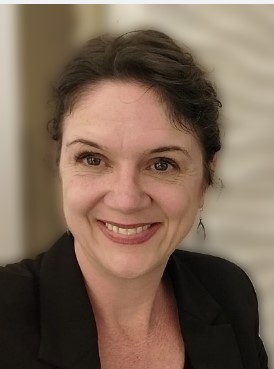
São Paulo – When questioned about Ancient Egyptian writing, the students in teacher Rosemere Araújo da Silva’s class will hardly draw blank stares. The teacher, who gives History lessons at the Nair Alves Bratti municipal school, in the municipality of Sombrio, state of Santa Catarina, is trying to make hieroglyphics a part of daily life for her students in the (Brazilian) seventh grade. Rosemere uses an innovative method for teaching Ancient History, which includes drawing a parallel between Egyptian writing and the form of communication of current society.
The teacher introduces the theme of Egyptian writing with an explanation. But rather than explaining everything, she piques their curiosity and lets them do some research by themselves. The next step is taken by the students, who go out on the streets hunting for communication signals similar to those used by ancient Egyptians. It is worth noting that in Antiquity, the Egyptians used to make small drawings, mostly of elements of nature, such as birds, for non-verbal communication.
According to Rosemere, after searching, the students end up bringing into the classroom examples of traffic signs, maps and even bathroom signs that use the male and female figures instead of the words "men" and "women." Everything is shown in photographs, in the classroom, and students are then invited to try and write in a similar way to the Egyptians’. In the last time that Rosemere worked on the subject, students wanted to write messages for Mother’s Day. The texts, however, are not written in Egyptian, but rather using signs that the students create, in the moulds of Egyptian writing.
The goal, as teacher Rosemere explained in an interview to ANBA, is to bring students closer to something that seems very distant to them. She tries to make the students notice, for instance, that the Egyptians used elements of nature in writing because that was what was closer to them. Traffic signs, for example, which are currently a part of everyday life and of the students’ day-to-day, did not exist then. The subject of ancient writing is approached with students in the seventh grade, but should start being taught to fifth graders, explains Rosemere, due to changes in the curriculum of municipal schools.
The work is an initiative of Rosemere’s, who has taught History lessons for 23 years. The teacher was born in the state of Espírito Santo and holds a degree in Social Sciences. She has lived in Santa Catarina for 14 years, and explains that the idea of innovating in the teaching of Ancient History arose out of a desire for change. “When I used to take History lessons, I had to memorise texts,” she explains. She wanted to do something different, and had the idea after attending lectures and studying the matter. “I started reading university research work while pursuing a degree in the 1980s,” she says.
Rosemere’s approach to teaching was the theme of a lecture during the 15th Study Journey on the Ancient East, which took place early this month at the Pontifical Catholic University (PUC), in Porto Alegre, capital of the state of Rio Grande do Sul. The teacher was invited to be one of the lecturers by the organisers of the event, which brought together Ancient History researchers. The activities that she uses for teaching ancient writing, Rosemere explains, change with each year, depending on the profile of each group of students.
*Translated by Gabriel Pomerancblum
