



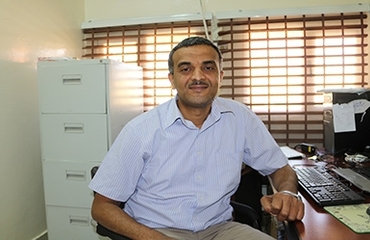
São Paulo – Sudan’s Muzamil Hamid, head of the Parasitology and Medical Entomology Department at the University of Khartoum, will speak at the 6th International Conference on Plasmodium vivax Research, from June 11 to 14 in Manaus, Amazonas. The Plasmodium vivax parasite is the most common cause of malaria and one of its types which infects humans.
The Sudanese researcher will discuss molecular and morphological identification of suspected vectors of plasmodium vivax in his country. Hamid speaks on Tuesday (13), in the panel “Understanding, mapping and new interventions in transmission,” beginning at 11:30 pm and featuring researchers from Brazil, Guatemala, the United States, Thailand, Guyana, Australia and Peru. Rhoel Dinglasan of the United States and Kevin Kobylinski of Thailand will be the keynote speakers.
The conference is organized by the Brazilian Society of Tropical Medicine (SBMT), whose primary sponsor is the Bill & Melinda Gates Foundation, with other sponsors including Fundação Oswaldo Cruz (Fiocruz). According to information released by the latter, the meeting will feature researchers from 30-plus countries and groups working in tandem with local and international authorities to advance an understanding of vivax malaria.
According to the conference’s coordinators, one of the highpoints of this edition will be the presentation of phase 3 clinical test results for Tafenoquin, a single-dose medicine for malaria. Research with Tafenoquin has been ongoing for more than ten years in Bangladesh, Peru, and Thailand, and tests were also run in Manaus. The third phase of testing is the last one before a pharmaceutical product gets cleared for commercial sale.
The event opens with discussions on Sunday, from 9 am to 6 pm, and the opening ceremony will take place at 7:30 pm, with authorities and scientists in attendance. The conference will be presided over by Marcus Lacerda, a physician and researcher with Fiocruz Amazônia and from Fundação de Medicina Tropical Dr. Heitor Vieira Dourado (FMT-HVD), who is coordinating the event alongside researchers Wuelton Monteiro and Stefanie Lopes.
*Translated by Gabriel Pomerancblum

