



São Paulo – Tunisia was elected as “the country of the year” by the weekly British magazine The Economist, one of the most influential publications in the world. The democratic transition in the Arab nation was the main reason for the choice.
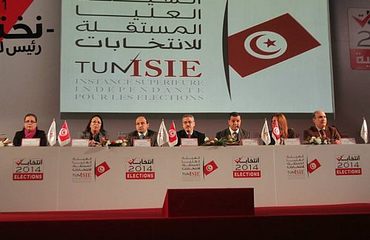
“The idealism engendered by the Arab Spring has mostly sunk in bloodshed and extremism, with a shining exception: Tunisia, which in 2014 adopted a new, enlightened constitution and held both parliamentary and presidential polls”, points out the magazine. The presidential elections will have a run-off on December, 21.
“Its economy struggles [to get better] and its polity is fragile, but Tunisia’s pragmatism and moderation have nurtured hope in a wretched region and a troubled world”, notes the magazine. “Mabruk, Tunisia!”, adds the text. “Mabruk” means “Congratulations” in Arab.
Last year, the choice was Uruguay, for its liberal stance on drugs and gay marriage. In 2013, the country announced the legalization of marijuana and approved marriage between same-sex people.
The magazine says that Uruguay had another good year in 2014 with a “model” presidential election, an impressive growth and the acceptance to host six ex-internees from Guantánamo, the Cuban region where the US keeps a military base and prison for people captured in the so called “War on Terror”, initiated by ex-president George W. Bush in the last decade.
The runners-up for the title of “country of the year,” however, were Tunisia and Indonesia. According to The Economist, in the Asian nation with the world’s largest Muslim population, “a modern politician bested the old, militaristic regime in a fair if rancorous vote. The new, reforming president, Joko Widodo, has begun to nudge his country beyond its crossroads and towards prosperity.”
On choosing Tunisia, the magazine remarks that the North African country is much smaller than Indonesia, “but we think symbolism matters more than size.”
Tunisia is the country where the Arab Spring erupted. In January 2011, a series of popular protests led to the ousting of then-president Zine El Abdine Ben Ali, who had been in power for 20-plus years. The first election held after the revolution was won by the Islamic party Ennahdah (“Renaissance”). There followed a period of political turmoil marked by violent episodes, until early this year the party yielded its power to a cabined formed by technocrats, whose term will last until new leaders are elected.
The parliamentary election was won by the Nidaa Tounes (“Call of Tunisia”) party, which is entitled to preside over the forming of a new government. For the time being, the interim prime-minister Mehdi Jomâa will remain in office. The political regime in place in Tunisia is parliamentarianism. The presidential candidates will be Béji Caid Essebsi, the leader of Nidaa Tounes, and incumbent president Mohamed Moncef Marzouki.
The magazine also mentions other countries that staged relevant facts throughout 2014. “Tiny Lebanon deserves a mention for absorbing hundreds of thousands of Syrian refugees, plus the machinations of malignant outsiders, and continuing, just about, to function,” the text reads.
The Economist believes that in case the peace process between Colombia’s government and the Farc guerrillas is successful, the country will be a serious contender to the title in 2015. The publication was probably already completed when the United States and Cuba announced the resumption of diplomatic ties.
Apocalypse
Other than that, the publication gives a glum review of the year that is ending, and lists a bevy of negative facts such as the attacks of the self-appointed Islamic State in Syria and Iraq, the dismemberment of Ukraine by Russian forces, the violent acts of Boko Haram in Nigeria and Shabab in the Horn of Africa, and civil war in the newly born South Sudan.
“Between war, disease and insurrection, the past 12 months have often seemed a gory relay for the apocalypse’s four horsemen,” the text reads.
*Translated by Sérgio Kakitani & Gabriel Pomerancblum

