



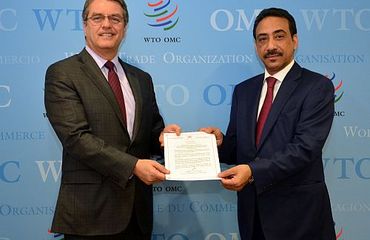
Brasília – A global agreement to streamline international trade became effective as of this Wednesday (22). According to the World Trade Organization (WTO), two thirds of its members – or 110 countries, which is the amount required in order for the deal to enter into force – have signed on to the Trade Facilitation Agreement (TFA).
The treaty is expected to cut costs of trade-related operations by 14.3%, and to bring USD 1 trillion in additional trade per year, with USD 730 billion coming from developing countries.
WTO director-general Roberto Azevêdo said procedures and costs are the highest in developing nations. “In those countries there is more room for cutting costs, and more to be gained by streamlining procedures, with added transparency and less paperwork,” Azevêdo told Agência Brasil.
Talks for the TFA began at the WTO’s Ministerial Conference in Bali, 2013. The deal is designed to make customs clearance of goods swifter. It ushers in a new era, enabling reforms that will make trade simpler and less dependent on paperwork around the world, with significant consequences to trade flows, the WTO explained. Brazil ratified the TFA in March 2016.
According to the WTO, all industries stand to gain with the agreement. “Some industries can make significant strides, especially those that depend on speed at the borders, like perishables and products susceptible to the changing seasons (footwear, fashion).”
“Generally speaking, businesses that rely on imported inputs also benefit from speedier, more predictable trade operations, besides the reduced customs fees. Businesses that are part of global value chains or ones that could become more involved in global trade flows will be in a better situation as well,” the WTO said.
Impact
According to the WTO, the TFA will cut export processing times by as much as two days, and import processing by a day and a half, or 91% and 47%, on average.
The organization also said that by making customs procedures easier, the TFA will also help new players join the foreign trade market. WTO numbers show that the number of exporters in developing countries could increase by up to 20% once the agreement is fully rolled out.
The TFA provides that developing and relatively less developed countries can create their own implementation schedules to match their abilities and needs. Countries which are more vulnerable will also be provided with resources in order to comply. The WTO has put a Trade Facilitation Agreement Mechanism in place to connect donors and recipients, as well as to divulge information and encourage partnerships.
Developed countries have committed to adhere to all of the agreement’s provisions.
The 110 countries that have ratified the TFA so far include the United States, European Union, China, Paraguay, Uruguay, Mexico, Peru, South Korea, Turkey, India, Russia and Chile. Arab signatories include Saudi Arabia, Bahrain, the United Arab Emirates, Jordan and Oman.
Azevêdo said TFA support will tend to “grow even further as the reforms it entails are effectively put in place and its advantages become even more evident.”
“People from all political backgorunds agree that bureaucracy is not a good thing when it comes to trade. It unnecessarily burdens business owners, increases costs to end buyers, and causes governments to allocate resources in an inefficient way,” he explained. “This economy-oriented logic led over 110 countries to ratify, the USA included,” the director-general said upon being questioned regarding US president Donald Trump’s protectionist discourse.
The TFA comprises 12 articles designed to increase transparency, simplify and harmonize procedures, cut costs, and increase predictability in International trade.
*With information from the ANBA Newsroom. Translated by Gabriel Pomerancblum

