



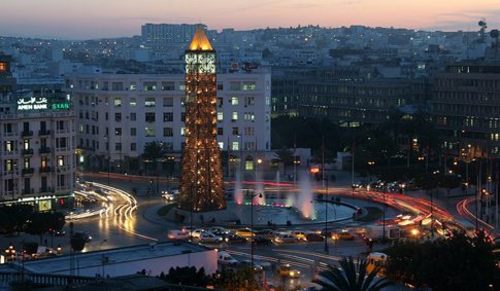
São Paulo – Tunisia promotes on June 13th and 14th a forum for investors aiming at promoting opportunities in the country and discussing the new foreign investment legislation to be issued soon. The meeting will be held in Tunis and the theme will be New Tunisia: towards a sustainable investment strategy. Brazilians can participate.
"It’s an opportunity to get to know the efforts that Tunisia is making after the revolution," said to ANBA the Tunisian ambassador in Brasilia, Bachtobji Sabri, referring to the popular uprising in 2011 that put an end to over 20 years of rule by Zine El Abdine Ben Ali.
Among these efforts, the diplomat stressed the development of a new investment code intended to attract the interest of foreign businessmen. At the forum, the Tunisians want to hear the views of participants regarding the new regulatory framework.
In this respect, in addition to entrepreneurs and investors, the meeting will bring together representatives from different areas of government, international agencies and also experts. "They will talk about the investment environment in Tunisia and discuss what investors expect from the country after the revolution," said Sabri.
He stressed, however, that despite the new code not yet being in force, the Tunisian legislation is already conducive to attracting foreign capital. As an example, the diplomat said that by investing in certain regions of the country, international companies can own 100% of the business, repatriate profits – free of taxes for 10 years -, and sell 30% of produce on the local market.
The government hopes to attract funds into underdeveloped regions of the country, hence the existence of additional benefits to those who decide to invest in certain areas, where there is skilled labour, but lack of job opportunities.
"The idea is to use these human resources, especially young people who have college degrees, and encourage investment in disadvantaged regions of the interior," said the ambassador. According to him, in the past, these areas were marginalized in development strategies and it was there that part of the discontent that sparked the Arab Spring protests emerged. "We need to generate wealth and jobs in these regions," he added.
Among the promising sectors for investors, he cited industries such as mechanical and electric equipment, vehicles, aircraft components and food, agriculture and the areas of energy and infrastructure.
Another goal of the initiative is to strengthen the talent of Tunisia as an export platform. In this respect, Sabri pointed out the country’s proximity to Arab, African, Mediterranean and European countries in general. "We are at the heart of the Mediterranean," he recalled. Since the heyday of Carthage, in antiquity, the Tunisian coast has been an important commercial hub.
Macro
According to the ambassador, the Gross Domestic Product (GDP) of Tunisia is forecasted to grow 4% this year. Although the country is still living a period of political turmoil, industrial production has grown over the last seven months and the gains of the tourism industry, one of the most important, advanced 30% in 2012, when compared to 2011, though it has been 10% lower than in 2010, which was a record year. Some 100,000 jobs were created last year.
The country, he said, has succeeded in improving its external accounts, and the current account deficit ended the first quarter at 1.8% of GDP, against 2.3% a year earlier. This was achieved by reducing the negative balance of trade, with exports growing faster than imports.
Last year, according to figures disclosed by the Ministry of Development, Industry and Foreign Trade, Brazil’s exports to Tunisia totalled US$ 351.5 million, a decrease of 6.7% compared to 2011.On the other hand, imports totalled US$ 137.5 million, an increase of 31.7% in the same comparison.
Service
Further information and registration for the forum
E-mail: [email protected]
Site: www.tunisiainvestmentforum.tn
Web page of the Foreign Investment Promotion Agency (FIPA)
www.investintunisia.tn
*Translated by Mark Ament

