



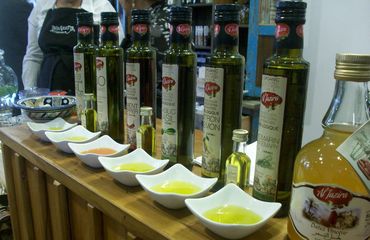
São Paulo – Tunisia’s olive oil is not yet a staple on Brazilian dining tables, but the product from the North African country matches really well with typical dishes served here, such as salads and cod. The evaluation is from Paulo Freitas, food engineer and an advisor on olive oil. The expert headlined a tasting event on the Arab products to importers and journalists this Friday (6) in the city of São Paulo.
“It’s a feature of the Tunisian olive oil to be more delicate, really similar to the taste of Brazilians. The standard olive oil sold in Brazil, regarding volume and approval, tips to the delicate, with a smoother intensity. I think that there’s a great opportunity to develop Tunisian olive oil in Brazil”, he said.
This Friday’s event is part of the schedule of a delegation from Tunisia that came to Brazil to attend the fair of the São Paulo Supermarkets Association (Apas Fair), which ended this Thursday (5). In the event, the olive oils tasted were from the brand Al Jazira. Rubens Hannun, vice-president of Foreign Trade at the Arab Brazilian Chamber of Commerce and honorary consul of Tunisia, opened the event and introduced the Tunisian delegation to the audience.
“Here in Brazil, we already have some dishes that are generally consumed with olive oil, with the main one being salad, and Tunisian olive oil has very suitable features for this type of use. On the other hand, in terms of intensity, we have the cod, a dish that is very often eaten with olive oil, but that demands a more intense product, which Tunisia also produces. The features of the Tunisian olive oil match very well with the uses that we make of it”, pointed out Freitas.
According to the expert, Tunisia has around 80 million olive trees. Its olive groves are located mainly in the center of the country, with 46% of the trees. The North has 32% of olive trees, with the South holding 22%. The main types of olive oil produced by Tunisians are the Chemlali de Sfax and the Chétoui.
The main buyers of Tunisian olive oil are Italy, Spain and Greece. Riadh Attia, assistant manager of the Tunisian Export Promotion Center (Cepex), said to the audience that, indirectly, Brazilians buy olive oil from his country. “We know that Brazilians consume Tunisian olive oil without knowing about it, since Tunisia exports olive oil in barrels to Spain, Italy and Portugal, and they send it under their label to Brazil”, he said.
The executive emphasized that Tunisia’s potential regarding olive oil production is not well known in Brazil and that the goal is to change this scenario. “We want to strike a win-win partnership with Brazilian business owners”, he said. Attia recalled also that with the 2014/2015 olive oil crop, Tunisia surpassed Spain and became the world’s largest olive oil exporter with the shipment of 300,000 tons of the product.
Rogério Gomes da Costa, an olive oil expert at fine food products store Casa Santa Luzia, assessed positively the Tunisian olive oils. To him, a marketing campaign directed at Brazilian consumers would help increase demand for Tunisian olive oil in Brazil.
“They are very good olive oils. They would need to promote a tasting campaign [with consumers], since people are more used to Portuguese, Italian and Spanish olive oils. They would need a [marketing] campaign for it [Tunisian olive oil] to be well accepted”, he concluded.
*Translated by Sérgio Kakitani

