



São Paulo – The PEER (Partnerships for Enhanced Engagement in Research), program managed by the United States’ National Academy of Sciences (NAS), opened a registration call for researchers in developing countries to submit their projects to receive funding from the United States Agency for International Development (USAID). Brazil, Egypt, Jordan, Lebanon, Morocco and Tunisia are among the countries eligible to receive funding.
The program will support projects with one to three years’ duration and the funding could go from USD 40,000 to USD 100,000 per year. The proposal submission to PEER will be done in two phases: pre-proposals, with a deadline on January 15th, and full proposal, with a deadline on April 2016.
PEER’s interest in Brazil is in funding projects that focus on conservation of diversity in Amazon. According to the program’s website, the projects should identify threats to biodiversity, such as deforestation, expansion of the agricultural areas and climate change, and propose conservation solutions for the monitoring of biodiversity.
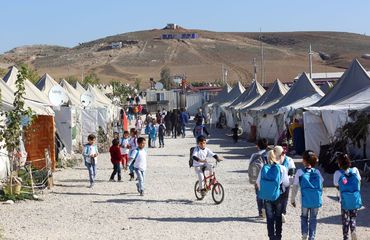
For Egypt, Jordan, Lebanon, Morocco and Tunisia, the program aims to support projects on prevention, detection and cure of diseases in the Middle East. PEER’s main interest in these countries is on projects focused on the displaced populations, such as the refugees fleeing conflicts in Syria and Iraq.
Tunisia is the only Arab country to which the program has an interest other than projects in the healthcare sector. For the North African nation, PEER also is after projects that focus on the empowerment of the new generations, expanding the science and technology areas.
The program’s main interest in Tunisia is the funding of projects on biotechnology applied to the healthcare and agricultural sciences sectors, of projects on sustainable energy and sustainable development issues and in the area of information technology and communication.
The candidates should also have built their projects in partnership with the following North American organizations: National Aeronautics and Space Administration (Nasa); National Institutes of Health (NIH); National Oceanic and Atmospheric Administration (NOAA); National Science Foundation (NSF); USDA Agricultural Research Service; USDA Forest Service; USDA National Institute of Food and Agriculture; United States Geological Survey (USGS); Smithsonian Institution; General Electric GE; and National Instruments Corporation NI.
Further information on the program are available in the following websites:
Brazil: http://sites.nationalacademies.org/PGA/PEER/PGA_152146
Egypt, Jordan, Lebanon, Morocco and Tunisia: http://sites.nationalacademies.org/PGA/PEER/PGA_168438
Tunisia: http://sites.nationalacademies.org/PGA/PEER/PGA_168442
*With information from Agência Fapesp. Translated by Sérgio Kakitani

