



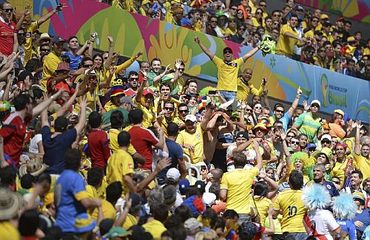
Rio de Janeiro – The FIFA World cup is creating 1 million jobs in Brazil, i.e. over 15% of 4.8 million formal jobs created during the administration of president Dilma Rousseff, which began in 2011. The championship should lead to R$ 30 billion (US$ 13.4 billion) being injected in the Brazilian economy.
The figures were taken from a survey conducted by the Economic Research Foundation Institute (Fipe, in the Portuguese acronym) at the request of the Ministry of Tourism. It cross-references projections of the World Cup’s impact and information from the Labour Ministry’s General Register of Employed and Unemployed Persons (Caged), in the period from January 2011 to March 2014.
During a visit to João Saldanha Open Media Centre, at Fort Copacabana, in Rio de Janeiro, the chairman of the Brazilian Tourism Institute (Embratur), Vicente Neto, discussed the survey’s results. He said “we are celebrating a very significant figure at this time. This is an extraordinary human legacy,” he said.
According to the survey, out of all World Cup-related jobs, 710,000 are permanent and 200,000 are temporary, but all are registered. In the tourism industry alone, the sports event has originated 50,000 new openings.
Vicente Neto noted, during the interview, that occupancy rates in the 12 World Cup host cities during the first week were 45% higher than expected, according to sectorial organizations. By June 11th, 340,000 nights were spent, up 100,000 from the forecasts of the Brazilian Hotel Operators Forum. “The numbers are exceeding our expectations,” said the Embratur chairman.
Vicente Neto said the Embratur expects that the hosting of major events like the Cup will help promote Brazil as a premier international travel destination, driving jobs and income growth in the country.
The Embratur chairman said Brazil has stood out in hosting world-class events, having climbed ten positions in the ranking of the International Congress and Convention Association (ICCA) from 2003 to 2013, jumping from the 19th to the 9th position among the countries that host the most congresses and conventions.
“The total number of events held in Brazil during this period soared from 62 to 315, and the number of host cities went from 22 to 54. This growth is due to an international events decentralization policy,” he said.
*Translated by Gabriel Pomerancblum

