


São Paulo – To put in the hands of readers and researchers literary works that can be used as a theory and methodology framework for studies of the Arab and Islamic cultures. With this goal, the São Paulo-based publishing company Ateliê Editorial has been releasing, over the last eight years, the Arab Studies Collection.
Four titles are already out, with two more to come in the first half of 2016, according to the Collection’s curator, Mamede Mustafá Jarouche, who is a professor at the Philosophy, Language and Human Sciences Department (FFLCH) at University of São Paulo (USP).
So far, the books of the collection covered literature, arts and philosophy. In the next few months, one of the books to be launched is Arábia Brasília, with studies on Brazilian writers of Arab descent, written by the professor of Brazilian Literature at Porto University, Alberto Sismondini.
The other book set to be launched is Leão, o Africano (Leão, the African), by the History professor at Rio de Janeiro Federal University, Murilo Sebe, which tells the story of the Muslim Al-Wazzan. He was captured by pirates in 1518 and became a servant of Pope Leo X, for whom he wrote an historical and geographical essay in Italian. The document was translated by Sebe and will be published along with the book.
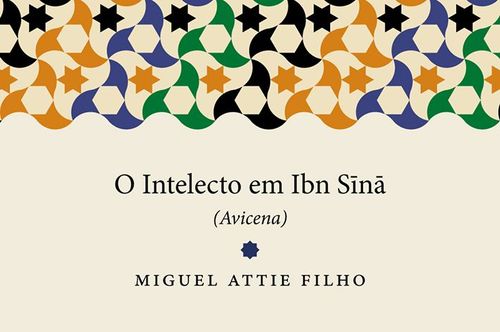
Already published by the Arab Studies Collection are the books O Simbolismo dos Padrões Geométricos da Arte Islâmica (The Symbolism of the Geometric Patterns in the Islamic Art), by Sylvia Leite, O Intelecto em Ibn Sina (The Intelect in Ibn-Sīnā), by Miguel Attie Filho, A Arte do Zajal (The Art of Zajal), by Michel Sleiman, and Na Senda das Noites (In the Path of the Nights), by Christiane Damien.
The book by Sylvia Leite is a reflection on Muslim art and its relations with derivational morphology in Arabic language, starting with the architecture of Alhambra, a neighborhood in the Spanish city of Granada. In the book on Ibn-Sīnā, Attie Filho studies the concept of ‘Aql, or the intellect of the mind.
Michel Sleiman wrote about the poetic form Zajal, which developed in Andalus, with a focus on the Arab-Islamic poet Ibz Qyzman, and Damien published a study on the influence of the One Thousand and One Nights, particularly the French translation by Galland, on French romantic author Charles Nodier.
Jarouche said that, although qualitatively substantial, the titles are few. “We are not dealing, for instance, with the Jewish or Japanese culture, whose governments and communities really concern themselves with the promotion of their cultures and encourage it by funding the publishing of books”, he said.
According to him, the only support offered, besides the willingness of the editor, came from publicly-funded research bodies, such as the Coordination for the Improvement of Higher Education Personnel (Capes), linked to the federal government, and the São Paulo Research Foundation (Fapesp), linked to the São Paulo state government.
Until now, all of the authors published are Brazilians. The book by Sismondini, who is Italian, is the Collection’s first by a foreigner author. Jarouche also says that towards the end of 2016 should see the launch of the book Os Arabismos e Outras Vozes Médio-Orientais do Dicionário Houaiss (Arabisms and Other Middle-Eastern Voices in the Houaiss Dictionary), by the Spanish Arabist Federico Corriente Córdoba. “A detailed etymological-philological work on the Arabisms in the Portuguese language, with surprising results”, says the curator.
Also in production is the edition of excerpts of One Thousand and One Nights translated by D. Pedro II directly from the Arabic to Portuguese by the researcher Rosane de Souza, from Santa Catarina state, who found the manuscripts, and by Jarouche.
The Arab Studies Collection was created after the approval by Capes of a post-graduation course in Arabic at USP. “The bibliography in Portuguese is scarce”, says Jarouche, about the material available for studies in Arac and Islamic culture. The goal is to offer a theoretical basis to these studies, adding to the existing bibliography in Portuguese. “The choice of titles is based on academic importance, since we’re talking about research”, says the curator.
The collection fits the proposition of Ateliê Editorial, created in 1995 by editor Plinio Martins Filho, of bringing to readers books with high editorial quality, with editions that excel in attention to content, format and expression. The focus is literature, including essays, literary criticism and other topics from academia, communication and arts, architecture, editions of literature classics and studies on books and their universe.
The books can be purchased from bookstore chains throughout the country and from the publishing company’s website (www.atelie.com.br). Ateliê publishes, on average, 30 new titles every year. Its publications have won national and international awards such as Prêmio Jabuti, the São Paulo Association of Art Critics (APCA) prize and the American IDA International Design Awards. The curator Jarouche also won the APCA, Jabuti and Brazilian National Library’s Paulo Rónai prizes.
Ateliê Editorial
Website: www.atelie.com.br
Blog: blog.atelie.com.br
Phone: +55 (11) 47025915
*Translated by Sérgio Kakitani
