

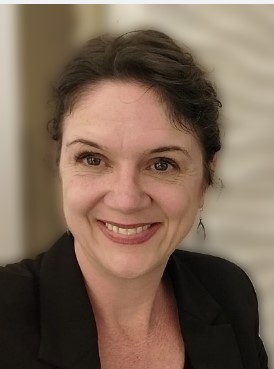
São Paulo – At first glance, it seems like another common scene of executive life in the city of São Paulo. An office in a business complex, with a pleasant view of the city, and a foreigner sitting in his chair, behind his desk, running the operations of a multinational company in Brazil. The peculiarity shows, though, when one takes a better look at the executive and his office. He has dark eyes and large eyebrows, typical of those born in the East, and on the wall is a diploma written in Arabic. Tarek Farahat is the president of Procter & Gamble Brazil and is of Egyptian origin. The combination of the two – Arab executives and multinational companies – is not very usual in Brazil.
However, 45-year old Farahat does not feel peculiar. He feels at home in Brazil and in his office at Procter & Gamble. Being in a foreign country is part of his routine, by the way, since he was a twenty-something. The Egyptian joined the United States-based company while living in Saudi Arabia, at age 24, and has lived in foreign land ever since. He has been to Switzerland, France and Germany, always in Procter & Gamble’s Marketing sector. In 1999, he arrived at the company’s Brazilian unit for the first time, and left in 2002 to go to Venezuela. He returned in 2006 as president of Procter & Gamble Brazil.
What brought you here? – was the question asked by ANBA. And Farahat does not hesitate. He claims that it was his flexibility. “Whenever you show flexibility, the company opens up opportunities for you,” says the Egyptian, explaining that the concept ranges from the possibility of living in different places to agility in adapting to other cultures and learning languages. He also says that he showed the company, throughout his career, that he is able to promote change, and Brazil currently offers possibilities of growth for Procter & Gamble. “Brazil is in a very good moment and we must keep up,” he says.
In between one question and another, though, Farahat reveals his other facets, as an executive, that helped him attain a position much coveted by MBA students worldwide. “I never settle for anything right off the bat. If we are about to sell 1 million, I will ask why not 2 million. If we are to sell 2 million, I want to know why not 3 million,” he explains. He admits that he has inherited “a bit” of the Arabs’ aptitude for negotiating. The Arabs, however, are known for their trade, for buying and selling, and not for their production skills, Farhat underscores. At Procter & Gamble, the Egyptian oversees manufacturing, sales and other areas, such as Human Resources.
Farahat also explains that he enjoys posing challenges, and that it is part of his style of commanding. But he reveals the guiding principle for his actions: always choosing what is correct. “If something is going to generate lots of results, but is not correct, then I will not do it. I always do the right thing. This allows me to sleep soundly every night,” he claims, saying that that includes doing everything very well, always. “I want to give it 100%, or else I will not even do it,” he states. He does not ascribe his option for correctness to religion, but the fact is he is a Muslim man. He does not go to mosques, but prays five times a day, as the Koran requires. “Religion, to me, is something between me and God. And it helps me to live better,” he says.
In São Paulo
Farahat explains that he likes the city of São Paulo a lot. “In the first six months, when I arrived, I did not like it much. But now I really enjoy São Paulo. Traffic, dinners, cinema, shopping centres, the rain. São Paulo is addictive,” he claims. The Egyptian brought along his family, which has the same appreciation for the city. Thus, Farahat did not think twice when invited to assume the presidency of Procter & Gamble in Brazil. He says that even if he moves to another country some day, he wants to maintain a residence in São Paulo. In the city, Farahat is also a director of the Arab Brazilian Chamber of Commerce.
The Egyptian, who was born in Cairo, also speaks well of Brazil and the Brazilians. He claims that Brazilians know how to live life, enjoying every moment. “When the weekend comes, they go to the beach, when there is a football match, they go watch it, and when it is time to work, they work well,” he describes. As an executive at a company that makes consumer goods, Farahat cannot help but detect other features. “The sense of beauty is strong in Brazil, even among men. The rate of bathing and tooth brushing is among the highest in the world. So is the number of dentists. Brazil is the country with the most pets in the world, and the second largest consumer of hair care products,” he says.
When questioned whether Brazil has changed him in any way, he says yes, the country has made him a less prejudiced person. Before arriving at the country, what Farahat had heard about it basically boiled down to football. By the way, he admits that he cried when Brazil was eliminated from the 1982 World Cup after losing a match to Italy. In the country, according to him, he met a very open population that accepts people from all over the world. “Brazil has a very inviting culture. There are people from around the world in the country, and they are all Brazilians,” he asserts.
Another aspect of the country that really attracts his attention – and which he takes very much into consideration in his activities as president of a multinational company – is the purchasing power that exists in Brazil. “There are companies here that post revenues in the billions and do not export anything,” he marvels. He calls attention to the expansion of the lower middle class, which doubled in size in the country over the last ten years. By the way, if he is seen in a supermarket watching some lady buy diapers for her baby, let it be no surprise. As a good marketer, Farahat has this habit since the beginning of his career: going out on the streets to see the consumption happen.
“Business does not take place in the office,” he says. Farahat explains that what attracted him to Procter & Gamble was the company’s history in brand development, an area of which he is a fan until this day. The Egyptian built his career in the company. The son of a lawyer and coming from good schools, Farahat studied Business Administration at the American University in Cairo. He even worked at Johnson & Johnson, but stayed in the company for less than one year and then joined Procter & Gamble, where he is until this day.
*Translated by Gabriel Pomerancblum
