


São Paulo – Dancing to Arab rhythms, but also understanding where they come from, the context they were created in, what the communities that developed them were like. That’s the idea behind a five-month Arab Folklore course to be taught on Saturdays, starting on March 05, by the dancer and historian Mell Borba, in Recife, Pernambuco.
The course will comprise four modules, including hands-on dance classes and five lectures. Students will get basic information on the Arab world and culture, like who are the Arabs, what defines Arab ethnic dances, the difference between them and bellydancing, the approach to Arab dances in Brazil, what’s Orientalism and the thoughts of scholar Edward Said on West-East relations, among other topics.
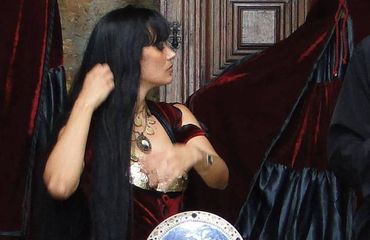
The hands-on lessons will cover the Snujs, small cymbals played by the dancers, the Ghawazee, a dance created by gypsies who lived in Arab countries such as Egypt, the Hagalla, a dance featuring delicate hand movements, and the Dabke, a traditional Arab group dance. Other topics will include the Kawliya, the Taksim, the Fellahin, the Guedra etc.
The course is part of a project called Yantra, created over five years ago to get socially isolated women in touch with the world through dancing. The initiative started out in the state of Bahia, which Mell used to live in, and is primarily targeted at housewives who don’t leave their houses much. For many, the all-female classes are their only respite, the only place their husbands will let them go to.
This new course in Recife, however, is intended for all student profiles, including Arab culture fans, Arab-style dancers, belly dancers and the general public. The course costs BRL 250 per module, and two lessons covering one single dance style cost BRL 60. Lectures can be attended by donating one kg of cat food, which will be passed on to animal care institutions. The course was produced by Teresa Távora.
The teacher
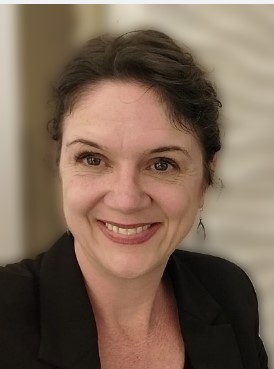
Mell Borba is a descendent of Arabs, but she only found out about her roots after coming into contact with Arab dances. Although she has been a dancer since age 10, she grew interested in Arab rhythms while in college, after being called on to represent Arab people, because of her countenance, in a festival showcasing the roots of Brazil.
When she brought up her interest in Arab culture, her grandmother, who moved from Yemen to Brazil as an infant, told her about her family’s origin. Mell’s great-grandfather, Abdel Al-Washli, was a Muslim Arab who migrated to Recife with his wife. She was a Jew, which was frowned upon in their country. Back in Yemen, theirs were rival families. “They were Romeo and Juliet,” Mell says.
Mell graduated in History at the Federal University of Pernambuco and then in Computer Sciences from the Catholic School of Pernambuco. Her profession, however, is ethnic dances. “Dances that carry their people’s identities,” she says. She was able to combine her interests in art and history. That’s why, in her courses, she wants students to known what they’re doing, how each of those artistic manifestations came to be, and what people they are tied to.
Besides being a historian, Mell is an ethnic dance researcher and a columnist for two Arab culture magazines. She is also a member of the band Ives Sahaqr e Beduínas.
Arab Folklore Course – Dances with Mell Borba
Saturdays at 3:30 pm
Beginning on March 05, 2016
Rua Alvares de Azevedo, 208 – Santo Amaro – Recife – PE
Additional information and enrolment:
(+55 81) 9 9637.2537 (Mell Borba)
(+55 81) 9 8623-3418 / 99727-9857 (Teresa)
Mell Borba’s Blog: http://mellborba.blogspot.com.br/
cursofolclorearabe@gmail.com
*Translated by Gabriel Pomerancblum
