



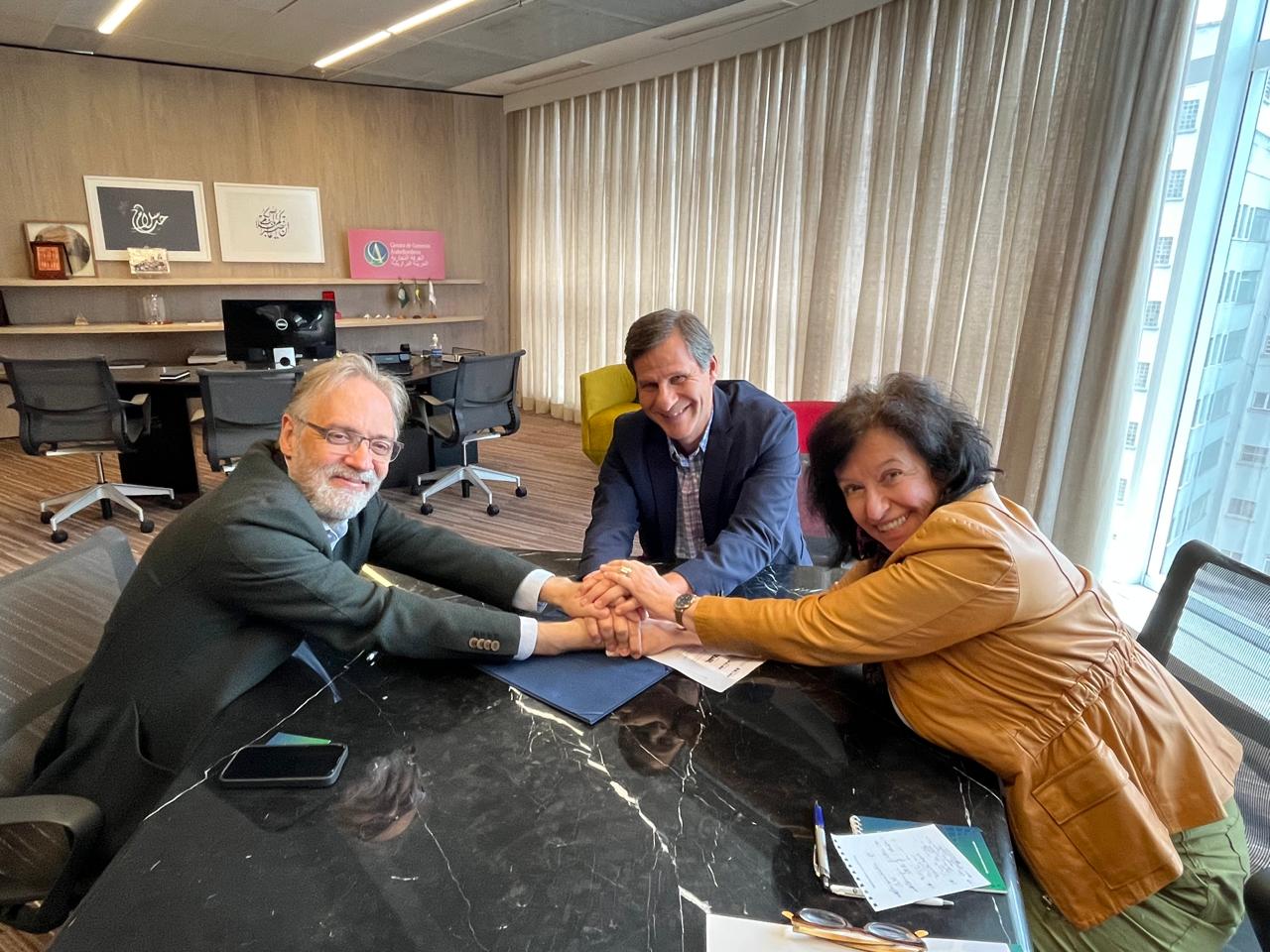
São Paulo – The Arab-Brazilian Chamber of Commerce (ABCC) and Brazil’s National Library Foundation (FBN) signed on Monday (20) at the ABCC’s headquarters in São Paulo, a technical cooperation agreement to carry out joint projects. The goal is to broaden the dissemination of knowledge about Arab culture and its presence in Brazil.
The agreement includes a range of activities, from the exchange of digital documents to the organization of events and exhibitions. Attending the signing ceremony were the ABCC’s International Relations Vice President & Secretary-General, Mohamad Orra Mourad, and Marketing Vice President Silvia Antibas, as well as FBN President Marco Lucchesi.
The FBN holds in its collection various documents related to Arab culture, including newspapers from immigrant communities, as well as old maps and editions of the Quran, the holy book of Islam. In Brazil, the ABCC hosts the Digitization Project of the Memory of Lebanese Immigration to Latin America, an initiative by the Holy Spirit University of Kaslik aimed at gathering and digitizing documents of Lebanese migrants in the region.
Lucchesi, Antibas, and Mourad discussed ways to expand the dissemination of this heritage, particularly knowledge about Arab immigration and memory in Brazil through future projects, including a review of the cataloging of Arab documents in the FBN collection. Additionally, Lucchesi said the institution is interested in expanding the Resgate Barão do Rio Branco project, which aims to catalog and reproduce handwritten documents from the period preceding Brazil’s Independence in 1822.
“The project could expand knowledge and research on the influence of Arab culture in Brazil and extend beyond São Paulo. The involvement of the National Library Foundation adds credibility to the initiative,” said Antibas. For Mourad, the agreement will be an opportunity to “fill gaps” in reconstructing the history of immigration, as well as to “enrich the bridge between Arab and Brazilian cultures.”
“The ABCC comes in as a major supporter of the foundation’s wealth, starting with the digitization of Arab newspapers written in Brazil. And to expand the scope of the Resgate Barão do Rio Branco project, to search the archives for what exists of Brazil around the world,” said Lucchesi.
Read on:
Genesis of an immigration memory project
Translated by Guilherme Miranda

