


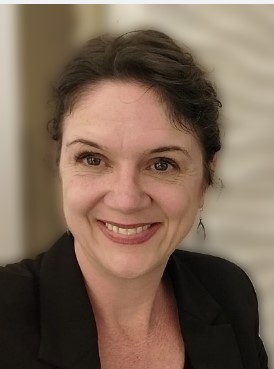
São Paulo – Early this year, she released a book of Arab stories for kids. She had already published another, four years, in which one of the main characters was Egyptian queen Nefertiti. Now, after bringing a bit of Arab culture into the universe of Brazilian children, she is beginning to show her literature to the Arabs themselves. One of Ana Maria Machado’s books is part of an anthology organized by the Brazilian Embassy to Kuwait, and another is in Bloomsbury’s Qatari catalogue, scheduled for publication in January 2013. Negotiations are also underway with a publishing house from the United Arab Emirates.
But does Ana Maria have a penchant for all things Arab? Not exactly. Of all her books, of which there are over 100, four or five are just drops in the rain. The writer is an appreciator of Arab literature. “I was deeply marked by the works of Edward Said, who attracted my attention to many other Middle Eastern authors whom I sought out and discovered little by little: Tariq Ali, Albert Hourani, Tahar Be Jelloun and others. I really like Amin Maalouf, whose works I’ve read almost in their entirety. And I consider ‘Les Enfants du Nouveau Monde’, by Assia Djebar, a fine novel, very strong,” said the writer.
Still, all of that and the fact that there are Arab descendants among her loved ones, was not what caused her to write Histórias Árabes (Arab Stories), in which she tells four Arab tales. “But all those reasons indicate why I’m interested in the culture,” says Ana Maria, who is one of the leading children’s book writers in Brazil, and the president of the Brazilian Academy of Letters, in an email interview to ANBA.
The “Arab Stories” book is part of a project with publishing house FTD to recount stories from different cultural traditions. Aside from the Arab tales, books have been published about Greece and the Persians. A volume on China is in the final stages of editing, and Ana Maria is writing African stories. The next edition should focus on Russia. The writer explains that she writes mostly based on memories of what she has read and heard in her life, but also on research in out-of-catalogue books that the children in her family own.
“When I was little, I had this enchanting collection: ‘Os mais belos contos de fada’ (The most beautiful fairy tales,’ from Editora Vecchi. You had Hungarian, Polish, Irish, English, Arab, Indian, Persian, more than twenty volumes. Me and my brothers would read and reread them all the time. It was part of our repertoire. And I think nowadays the children are far away from that wealth, such a rich heritage. So I wanted to retell those stories,” she says.
Ana Maria says, however, that this is a literary endeavour, not ethnographical research. That is why she didn’t bother with comparing versions, and in many cases there were no other books to compare with. “I include my personal take, which has been preserved in my memory. In the case of Arab and Persian tales, I don’t exactly add stuff, but I emphasize the hospitality, the religiosity in daily life, the strength of the presence of genies, the importance of markets, merchants and trade, the respect toward knowledge,” she says.
Regarding Arab stories, the writer says she wrote the book with much affection because of the fascination she had with the tales as a child, and later when she studied literature and read “One Thousand and One Nights.” “My godmother was Lebanese, people spoke Arabic in her house, I have always had a lot of contact with the Syrian-Lebanese colony in Brazil. It’s a cultural world that I respect, admire, and am fascinated with. There is a strong influence from that culture in Brazil, we all have friends of Arab ascent and don’t even notice, because we are a society that tends to accept integration,” she says.
In the book “Arab Stories,” Ali Baba’s tale is one of the best known in Brazil. It is the story of lumberjack Ali Baba, who finds a cave filled with treasures belonging to forty thieves. The book also includes “The Lamb from Baghdad,” in which two rich friends make a bet to determine whether money or virtue and Allah’s help bring happiness. The other stories are “The Talking Bird,” about the youngest of three sisters who married the sultan and made the others envious, and “Carpet, telescope and apricot,” in which three brothers compete for the sultan’s daughter.
Ana Maria has been working on the project with FTD for approximately four years. She says that children in all countries are generally not much aware of other cultures, and it is great that they will have the opportunity to learn more. “But I am sure that any child anywhere becomes interested in a well-told story, no matter where it comes from. I hope the people in Arab countries, whatever their age, will also get to know Brazilian literature someday, and that Arab writers will read us as much as we read them,” she says.
One of Ana Maria’s books is part of an anthology organized by the Brazilian embassy to Kuwait: it is entitled “De fora da arca” (From the outside of the ark) and was translated into Arabic. It tells the story of those who wouldn’t enter Noah’s Ark. The book to be published by Qatar’s Bloomsbury, also in Arabic, is “Era uma vez um tirano” (Once upon a time there was a tyrant). It tells the story of a country where people lived happily, talked to each other and had ideas, until a tyrant came by, getting in the way of everything and complaining about even the colours and the stars. The book will be published in the Emirates under another title, which Ana Maria prefers not to disclose before negotiations are completed.
The other book Ana Maria wrote which has a connection to the Arab world was “Mensagem para Você” (Message to you). In it, she tells the story of five classmates doing a group assignment on Queen Nefertiti; in their work, an excerpt they did not write, about the queen’s intellectual importance, , appears mysteriously. They also start getting anonymous messages that seem to come from the past, and embark in a beautiful adventure while trying to decipher the events.
*Translated by Gabriel Pomerancblum
