



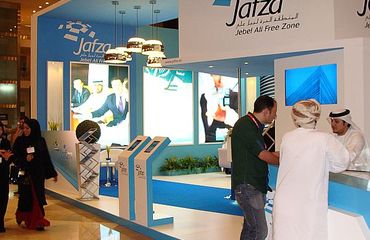
Dubai – The Arab Brazilian Chamber of Commerce and the Jebel Ali Free Zone (Jafza) are holding a seminar in São Paulo next April to show Brazilian companies the advantages of operating in the facility in Dubai. The event will be organized via a partnership with the Brazilian Export and Investment Promotion Agency (Apex-Brasil) and may also be taken to Rio de Janeiro.
The Jafza senior vice president for global sales, Adil Al Zarooni, has said this Wednesday (26th) at the Gulfood fair in Dubai that he plans on showing Brazilian businessmen the advantages to operating at the Jafza. “We are taking our client base to the entrepreneurs. We are showing them that Jafza is a good choice for those who wish to do business in Dubai.”
Companies working out of the Jafza get 50 years’ exemption from corporate taxes, which are levied on revenues. They are also free from income taxes, import taxes and re-export taxes. There are no restrictions as to employing foreign personnel or currency circulation. Enterprises are allowed to be fully owned by investors, and not required to have a local partner, as is the case elsewhere in Dubai.
According to the Arab Brazilian Chamber CEO Michel Alaby, the seminar will break down the process of investing in the region and the do’s and don’ts. “The Jafza’s main emphasis is on storage. Companies are allowed to undertake other steps in the production process there, such as packaging, but they cannot slaughter animals in the facilities, for instance,” he said as a case in point.
Halal products
This Wednesday at the Gulfood fair, Zarooni and chairman of Economic Zones World (EZW), Hisham Abdullah Al Shirawi, launched the EZW’s plan to develop an area within the Jafza dedicated exclusively to halal food processing, i.e. food made in accordance with Islamic law. According to Shirawi, enterprises in the food, beverage, pharma and personal care industries are looking to operate under the halal system within a free zone.
Zarooni said Dubai’s goal is to become an Islamic financing hub. “We want to play a key role in the region’s finances. Already the United Arab Emirates is the leading distributor of goods to the region, and yet we believe we can open up new vistas in the halal product supply chain,” he told ANBA.
As per a survey conducted by the Jafza and EZW, the turnover from halal products averages at US$ 2.3 trillion a year. Of these, the Gulf accounts for US$ 166.9 billion and the UAE accounts for US$ 15.8 billion.
*Translated by Gabriel Pomerancblum
