


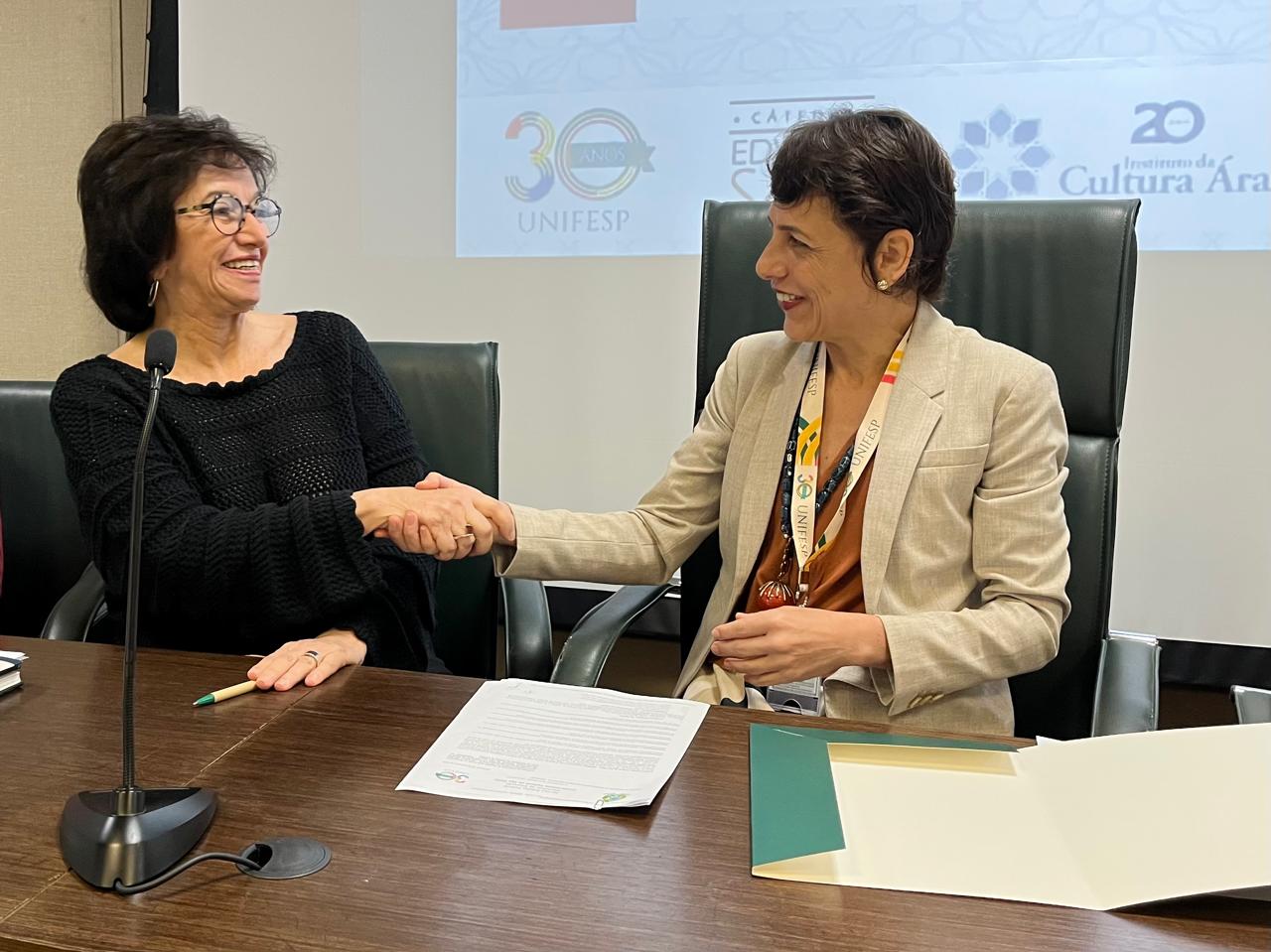
São Paulo – The Vice President of Marketing at the Arab-Brazilian Chamber of Commerce (ABCC), Silvia Antibas, and the dean of the Federal University of São Paulo (Unifesp), Raiane Assumpção, signed on Friday (28) a partnership to digitize and research documents aimed at recovering the memory of Arab immigration in Brazil. The agreement was formalized during the seminar “New Perspectives on the Arab Diaspora in Brazil: Memory, Literature, and Translation”, held at Unifesp’s headquarters in São Paulo.
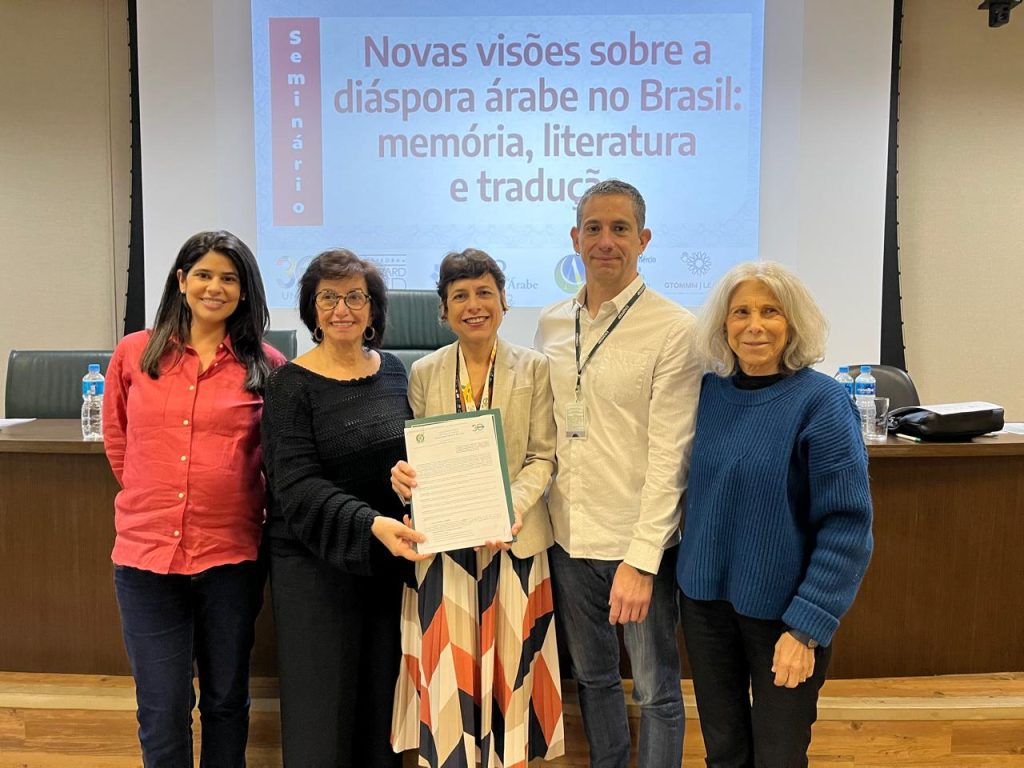
The partnership establishes that Unifesp will provide a team of digitization specialists and researchers to support the Project for Digitizing the Memory of Arab Immigration in Brazil—itself a collaboration between the ABCC and the Holy Spirit University of Kaslik (USEK) in Lebanon. Through this project, families and institutions that hold documents related to Arab immigration lend them to the ABCC for digitization. The materials are then added to a digital database, and the physical copies are returned to their owners along with digital versions.
In her presentation at the seminar, Antibas shared more details about the initiative and its importance to the Arab community. “We are just beginning, and in fact, this project will have no end. For it to thrive, we need partners,” she said, referring to the agreement signed with Unifesp and with other institutions outside the state of São Paulo, including Rio de Janeiros’s National Library Foundation and others in Ceará, Minas Gerais, and Rio Grande do Sul.
A discussion on Arab immigration
The seminar was held by the Edward Saïd Chair at Unifesp, in partnership with the ABCC and the Institute for Arab Culture (IcArabe), represented by its president, Natalia Calfat. Also present were former Unifesp rector and founder of the Chair, Soraya Smaili, honorary coordinator Olgária Matos, and coordinator Javier Amadeo.
Oswaldo Truzzi, a professor at the Federal University of São Carlos (UFScar), presented the lecture “The Early Days of Studies on the Arab Diaspora.” The event’s program also included the launch of the 10th edition of Exilium magazine, discussion panels on immigrant press, immigration and demography, literature and translation, as well as a cultural recital.
Read more:
A partnership to foster Arab culture
Translated by Guilherme Miranda
