



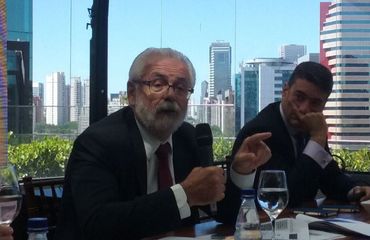
São Paulo – In Brazil, 20 different industries have picked Arab countries as priority export markets. The information was made public by Roberto Jaguaribe, president of the Brazilian Export and Investment Promotion Agency (Apex-Brasil). Jaguaribe spoke at a press conference this Tuesday (6) in São Paulo.
“That region is home to major markets across a number of industries. Some are beginning to pay much more attention [to Arab countries], such as processed foods, furniture, marble and granite, and ceramics, which are highly competitive industries in Brazil; auto parts and oil industry equipment, parts of which Brazil is competitive in; and pharmaceuticals, cosmetics, and meats, which already see large amounts sold, but which obviously could improve. I have twenty different industries that are prioritizing [those markets],” Jaguaribe said.
Apex’s president also mentioned the lighting fixtures and lighting, milk and dairy, and medical, dental and hospital equipment industries as having set their sights on the Middle East and North Africa. Out of 761 actions carried out by Apex through October this year, 34 targeted Africa and the Middle East.
The executive said agribusiness will be a primary focus for Brazilian overseas, with actions rolled out in partnership with the federal government and organizations from industries including meats, coffee, and fruits.
Investments
Jaguaribe also said there’s interest in coaxing Arab funds to invest in Brazil. “There’s an abundance of resources in the Arab world that isn’t being channeled to Latin America as a whole. We have even created a group called the Aspa (Summit of South America-Arab Countries) in a bid to improve general relations between our regions, and these are regions that stand to gain a lot from broader investment and trade,” he stressed.
Speaking to the press, Jaguaribe pointed infrastructure out as a Brazilian government priority when it comes to pulling investments in. “There is a marked infrastructure deficit in Brazil, and this detracts from the economy as a whole, holding back progress in myriad industries,” he remarked. He later expressed interest in getting Arabs involved in Brazilian infrastructure.
“There’s no doubt in my mind that we will work to improve our ability to attract investment from the Arab world, and that includes infrastructure investment, via the funds that many of those countries have created,” he said.
Jaguaribe also discussed the Apex’s incorporation into the Brazilian Ministry of Foreign Affairs, and how this should broaden the agency’s scope, as it will be represented in every country that Brazil has diplomatic offices in.
Apex gave support to 11,466 companies across 89 economic sectors in 2016. From January to October, Apex-backed businesses grossed a combined USD 35 billion from exports.
*Translated by Gabriel Pomerancblum

