


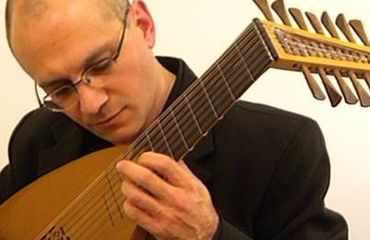
São Paulo – Ancient music and the instruments used to play it, such as the Arab lute, will be the topic of a lecture scheduled for Monday (5th) at the Federal University of Pelotas (UFPel). Professor and songwriter Fernando Lewis de Mattos will introduce and speak of five types of instruments: the lyre, which is Greek; the setar, which is the Persian lute; the oud, an Arab lute, and the cittern, a medieval guitar.
The presentation will cover the origins of plucked string instruments, in which the string vibrates when played by fingers, pick or other object, and of musical systems of different ancient traditions such as Sumerian, Greece, Persia, Byzantium and Arab world. There will also be improvisation play for each type of music and instruments explained.
According to the secretary of UFPel’s Music Conservatory, Eliane Brum Machado, the event is part of celebrations for the 97 years of the Conservatory. The lecture starts at 7 PM, ends at 9:30 PM and in the last half hour those participating and that had brought their own instruments will be invited to play and improvise with Mattos.
The speaker has a doctorate in Composition and is a professor at the Music Department at the Federal University of Rio Grande do Sul (Ufrgs). He’s also a composer and arranger, appeared in soundtracks for theater, video and movies, produces sound material for exhibitions and plays in recitals, solo and with chamber music groups and orchestras. Mattos works with ancient and contemporary music with plucked stringed instruments.
The course is called “Stringed Instruments and Improvisation in Ancient Music” and is open to the general public. Registration is free. Those that didn’t register by last Friday (2nd) can register onsite up until the start of the lecture. Mattos will speak at the Auditorium 2 of UFPel’s Art Centre.
Service
Lecture “Stringed Instruments and Improvisation in Ancient Music” on October 5th, from 7 PM to 9:30 PM.
At the Auditorium 2 of UFPel’s Arts Centre
Rua Álvaro Chaves, 65, Pelotas
Free admission
*Translated by Sérgio Kakitani
