


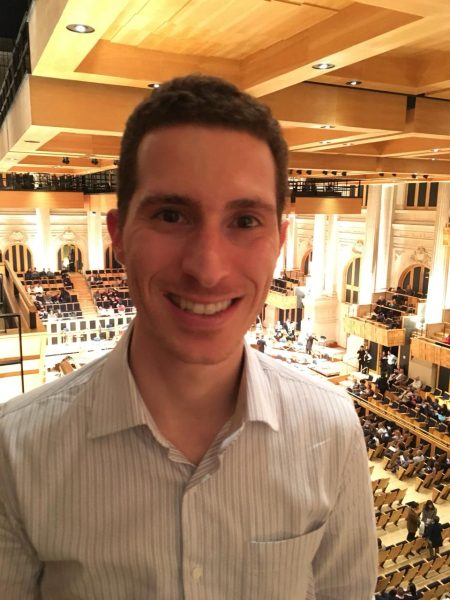
São Paulo – Next month, the professor at the School of Philosophy, Language and Human Sciences of the University of São Paulo (USP), Miguel Attie Filho, will cap off his studies on the philosopher Ibn Sina, also known as Avicenna, with the release of the last book in a trilogy which started being published in 2000. “Inteligência e metafísica em Ibn Sina (Avicena)” (Intelligence and Metaphysics in Ibn Sina (Avicenna)” wraps up a project which began in 1996, as the professor earned his master’s degree, and continued throughout Attie’s doctoral and postdoctoral studies, which he completed in 2006. Only now, after having completed other works, is Attie closing this cycle.
The three books, released in 2000, 2007 and 2012, address the thinking of Ibn Sina, an 11th century philosopher who managed to relate the knowledge that human beings develop regarding themselves, which is intelligence, and questionings about what is existence and what is the universe, which are issues addressed by metaphysics.
This study gains depth in the last volume of the trilogy, which also includes “Os sentidos internos em Ibn Sina” (The inner meanings in Ibn Sina),the first to be released, and “O intelecto em Ibn Sina” (The intellect in Ibn Sina), the second book. The three are the result of Attie’s research work for his master’s dissertation, doctoral thesis, and his postdoctoral studies.
The philosopher was born in 980 in the region where Uzbekistan is now located, died in 1,037 in Iran, and was one of the founding fathers of the Falsafa, i.e. Arab philosophy. Apart from addressing the relationship between man, his meanings, and questionings concerning existence, Avicena tackles other subjects. One of the main studies is a body of work known as “The Cure,” comprising books which study Logics, Natural Sciences, Mathematics, and Metaphysics.
With an eye on the Arabs
Attie became interested in Arab thinkers and Falsafa towards the end of his undergraduate studies, as he realized there was a dearth of studies on Eastern philosophers in Brazil. Brazilian and European schools used to focus on the great Greek, French, German and Renaissance philosophers, but not the Indian, Persian, or Arab ones. Ever since, the core of Attie’s studies has been the work of Avicenna, Averroes, Al-Farabi and Al-Kindi. To his surprise, however, the knowledge that these Eastern philosophers developed in their work was also based on theories forged earlier on in the West.
“I discovered that the Arab, Persian and Indian authors, whose philosophy we regard as something very different, are widely present in the formation of European thinking from the 12th century onwards. Thus, to study a thinker such as Avicenna is not to study a different philosophy, it is to study the history of thought. At the foundation to many of those we call Western philosophers lies the writings and influences of earlier thinkers we would call Eastern. These, in turn, are often linked to authors such as the Greek philosophers,” says Attie.
Even though the history of thought has “clicked” during his research work on Avicenna, Attie claims that it was during this process that he decided which subject matters to discuss in the trilogy. Again, these themes were selected based on the influence they had on other research work by great thinkers. “I set out to find works that were not only important for their contents, but which also had an actual repercussion in the formation of thought. It was my main guideline in choosing the texts,” says the professor.
The book now being released also deals with sensitive issues pertaining to the formation of the Arab people and Islamic faith. “To the mystical practice which is meant to connect the human to the divine, Avicenna’s theories were sort of like a ready dish. That is why a major portion of the thinking surrounding the Arab and Islamic mystique is also based on him,” he says.
Service
“Inteligência e metafísica em Ibn Sina (Avicena)”
Author: Miguel Attie Filho
Attie Editora
206 pp.
R$ 38 (approximately US$ 18 at current exchange rates)
Where to find it: until the end of the year at Livraria Cortez (Rua Bartira, 317, Perdizes. Tel.: (5511) 3873-7111 or www.livrariacortez.com.br . From January onwards at other bookstores. For additional information go to www.attienet.com.br . The official release is scheduled for 6:30 pm next Tuesday (4th) at Livraria Cortez.
*Translated by Gabriel Pomerancblum
