


São Paulo – One of the most important Lebanese artists today, Akram Zaatari will host his first solo exhibition in Brazil next month. The show “Tomorrow Everything will be ok”, to open at Galpão VB, in São Paulo, is organized by Videobrasil Cultural Association and runs from September 3 to December 3. The exhibit features six video installations in which the relations between visual collections and politics, desire and memory arise, with an image of contemporary Lebanon being presented.
Galpão VB, an 800-square meter art gallery at Vila Leopoldina, was opened by Videobrasil in October of last year. Solange Farkas, curator of Zaatari’s exhibit, says that since the place opened she’s been thinking of a Zaatari solo exhibition. The artist has a 20-year relationship with Videobrasil, always takes part in festivals organized by the association, was awarded for his initiatives, and his research and work are closely followed by Farkas, who is also the founder of Videobrasil. Gabriel Bogossian is co-curator of the show.
Farkas says that Zaatari relies heavily on material from collections, creating new narratives with them. Lebanon is a recurring theme and his projects usually portray cultural issues and conflicts faced by those living in the Arab country. “In his work the Lebanese identity is very much present, the conflicted identity”, she says. The topic of affection, and same-sex affection, are usually part of Zaatari’s research. The curator points out that the Lebanese artist is of great relevance in the international art scene.
The exhibition portrays Zaatari’s whole artistic path, but focuses especially in the artist’s passion for the cinema and affectivity in the Middle East. Zaatari arrives in Brazil at the end of August to set up the exhibition and will be at the opening on September 3. He will be available to visitors on the evening of September 5 for a guided visit and will participate in a public chat with art critic Moacir dos Anjos.
Zaatari uses photos, video installations, films and texts in his works. The videoinstallations in “Tomorrow everything will be ok” were created between 1998 and 2014. Three of the works were never shown in Brazil, among them “Another Resolution”, an installation with 12 small projectors in which adults re-enact poses from when they were children seen in old family pictures. The images allow the public to see the changes that occurred in Lebanon in the last few decades.
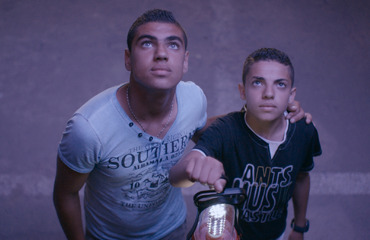
Another work never presented here is “Beirut Exploded Views”. In it, after an apocalypse, two young Lebanese men turn urban ruins in an improvised home. The third video installation that was never shown in Brazil is “Dance to the end of Love”, with material uploaded to YouTube by people from Egypt, United Arab Emirates, Saudi Arabia, Palestine, Yemen and Libya.
The other works were taken from the Videobrasil collection and were already exhibited in São Paulo. The themes vary from the relationship between two men, the variations between a dream, an audiovisual script and a desired love in exchanged message with the use of technology, and the choreography of a romance. The second work was the one lending the name for the exhibition, “Tomorrow everything will be alright”, and won the Grand Prize of the 17th Sesc – Videobrasil Contemporary Art Festival in 2011.
As part of the exhibition’s programme, a series of activities focusing on Zaatari’s work, the exhibition and other topics will be organized, among them, a course on contemporary Arab culture, a drawing course and a workshop for artists exploring the Lebanese artist’s installations. A book with critical essays on Zaatari’s works, in English and Portuguese, is in the plans to be launched on November 5. It will be the first book about the artist in Brazil, to be published by Videobrasil.
Quick Facts
Exhibition Tomorrow everything will be alright, by Akram Zaatari
Galpão VB, Videobrasil Cultural Association
When: September 3, from 4 pm to 8 pm
Open: from September 5 to 10, from 11 am to 8 pm, and from September 13 to December 3, from noon to 6 pm from Tuesday to Friday, and from 11 am to 5 pm on Saturday.
Admission free
*Translated by Sérgio Kakitani
