


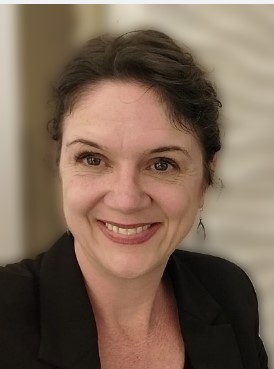

São Paulo – The sociologist and international policy specialist Demétrio Magnoli has criticized Brazil’s foreign trade policy of giving priority to trade with developing countries, the so-called Southern nations. In a lecture at the Arab Brazilian Chamber of Commerce last Tuesday evening (18th), the holder of a PhD in Human Geography from the University of São Paulo (USP) said the country should have focused on the United States. “Brazil has given up on the United States,” Magnoli said, listing other countries that benefited from it, such as Mexico and Canada.
Magnoli’s rationale is that the United States, alongside Latin America, is the primary buyer of manufactured goods from Brazil. According to him, this type of export, of industrialized goods, is more favourable to Brazil than selling commodities. “There has been a positive diversification of Brazilian trade partners, but the effects of this must not be overvalued; our major markets are still Latin America, the United States, China and the European Union,” he told the audience, mostly comprised of business executives.
He traced back the history of Brazil’s current foreign trade orientation to 2004, following the meeting of the United Nations Conference on Trade and Development (Unctad), whose final statement spoke of the signs that global trade was being fuelled by the South and asserted that this would transform the scenario. According to Magnoli, it was a proposition for a more multipolar international configuration, one less influenced by the USA.
“It was a way of reactivating a third-world based doctrine,” he said. According to him, in 2004 the world was experiencing the cycle of Chinese globalization. “The cycle of Chinese globalization was extremely beneficial to emerging countries, but not all of them; the commodity and foodstuff price hike placed social pressures on non-food producing countries,” he said.
According to him, these factors helped outline Brazil’s foreign trade policy, but said policy was based on two errors, according to the specialist. One error was Brazil’s believing China was part of the “South,” and the other was believing trade flows would shift from North to South, when they actually shifted from the West to Asia. China is part of the North, as pertains to trade and investment,” Magnoli stressed.
According to the PhD holder, Brazil shut out all trade agreements to focus on the Doha Round, which fell through and left the country commercially isolation, a situation made worse by the Mercosur’s own problems. He remarks that Brazil’s export volumes have increased since 2003. “The growth stopped in 2009 due to the international crisis, exports rebounded in 2010 and 2011 and then stagnated,” he said.
The growth in exports notwithstanding, Brazil has lost global market share, according to Magnoli. The trade deficit posted by the country for the first time in 2013 is a symptom of other imbalances, he said. During this period, Brazil missed out on the opportunity to improve its structural competitiveness, the specialist claims. “Our industry is the most serious symptom of Brazil’s structural loss of competitiveness,” he said. According to him, there are signs that Brazil’s industrial capacity is eroding.
Left out
Magnoli outlines a fairly unfavourable scenario for Brazil, in case the United States completes the trade and investment agreements currently being discussed with Asian countries and the European Union. The lecturer said in case these agreements go through, global trade will be revolutionized, and rules will be made elsewhere. “The United States will become more and more open to its partners,” he said.
Magnoli mentioned other parts of the world that engage in trade with Brazil, but said they buy virtually no industrialized goods from the country. A case in point is the Middle East. “Africa takes more products in, but the African market’s size is the African market’s size,” he ironized. China, according to him, does not buy manufactured goods from Brazil either. Latin America, the lecturer said, is too small to buy more than a fifth of the region’s own exports.
The specialist also said the Mercosur is too small for Brazil, and was converted into a political forum after being joined by Venezuela. He said the country should be able to enter into its own trade agreements, apart from the other Mercosur countries. Magnoli stressed that Brazilian trade with Arab countries is relevant, and highlighted the diversification of Brazil’s trade partners over the past few years. “This is an investment Brazil should make in the long run,” he said, remarking that the country must do it on its own, without the Mercosur.
The event was part of the Arab Chamber Lecture Cycle. The hosts were former director Mário Rizkallah and administrative vice president Adel Auada, and the mediator was the Market Intelligence director Luis Conrado Martins. Registration for the event was free of charge. The Arab Chamber Lecture Cycle covers topics ranging from economics, business and legal issues to history and culture.
*Translated by Gabriel Pomerancblum
